
From Dragons to Domes:
Mosques of the Silk Road and Islamic Architecture in China

Esra Çifci
From Dragons to Domes:
Mosques of the Silk Road and Islamic Architecture in China
Esra Çifci
During the period I spent in Shanghai to study Chinese under the research training scholarship of the Centre for Islamic Studies, one of my long-cherished aspirations was to explore the Islamic heritage of China. This scholarship represented, for me, a gateway into the cultural world of Chinese Muslims—a field to which I had devoted many years of study—and offered a rare opportunity to trace the historical imprints of Islam across Chinese geography. Yet I soon realized that pursuing this heritage would not be as straightforward as I had imagined. This realization dawned upon me during my first Friday prayer at the Huxi Mosque. While I had anticipated encountering a mosque harmoniously integrated with traditional Chinese architectural forms, I instead found myself before a structure defined by a rounded dome and tall minarets. This unexpected encounter initially evoked within me a sense of familiarity; it was as though both the mosque and I stood as strangers in this land, and this shared estrangement carried a certain quiet comfort. Yet this feeling of recognition soon gave way to a more persistent intellectual unease. For the architecture of a place of worship is never merely an aesthetic choice; it is, rather, a visible expression of the relationship a faith establishes with the geography it inhabits.
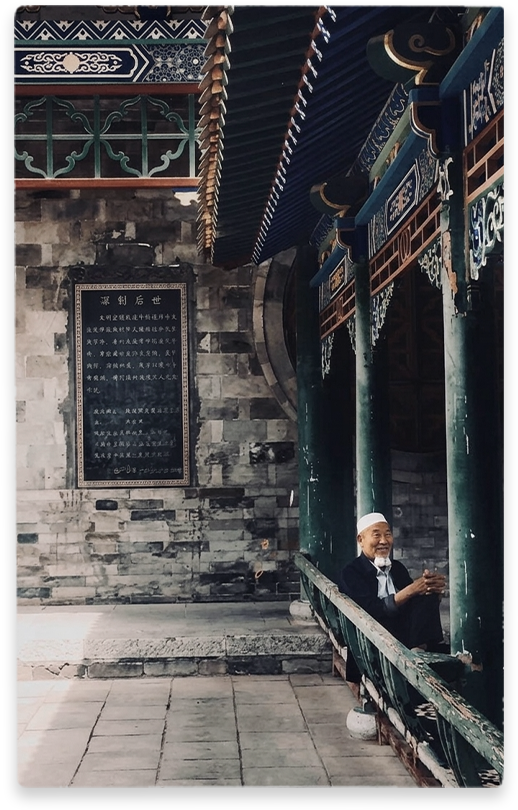
Najiahu Mosque*
As a form of communal self-representation in the public sphere, mosque architecture may reflect a community’s identity, its sense of belonging, and even its ongoing search for meaning. It was, I believe, this very tension that compelled the Huxi Mosque to occupy my thoughts so insistently. Despite Islam’s deep-rooted presence in China—extending over nearly fifteen centuries—the architectural language of the mosque before me seemed curiously detached from the cultural and historical fabric of its surroundings.
Upon leaving the mosque, I understood more clearly the nature of my quest. I sought out the ancient mosques that could narrate the story of how Islam had taken root in China. Yet I was equally aware that this would be a complex and demanding undertaking. China was home to more than thirty thousand mosques, the majority of which had been constructed after the 1980s in an effort to repair the profound ruptures caused by the Cultural Revolution. Moreover, many of these structures, much like the Huxi Mosque, bore the stylistic imprint of Arab and Central Asian architectural traditions, characterized by domes and minarets. Although the history of mosques in China—like that of its Muslim communities—can be traced back to as early as the ninth century, the vast majority of these early structures had been lost over time due to fires, earthquakes, rebellions, and wars. Today, despite such extensive destruction, the number of surviving historical mosques likely does not exceed thirty. Nevertheless, these enduring monuments remain dispersed across different regions of China, with a notable concentration in port cities and along the routes of the Silk Road, silently bearing witness to a layered and resilient civilizational encounter.
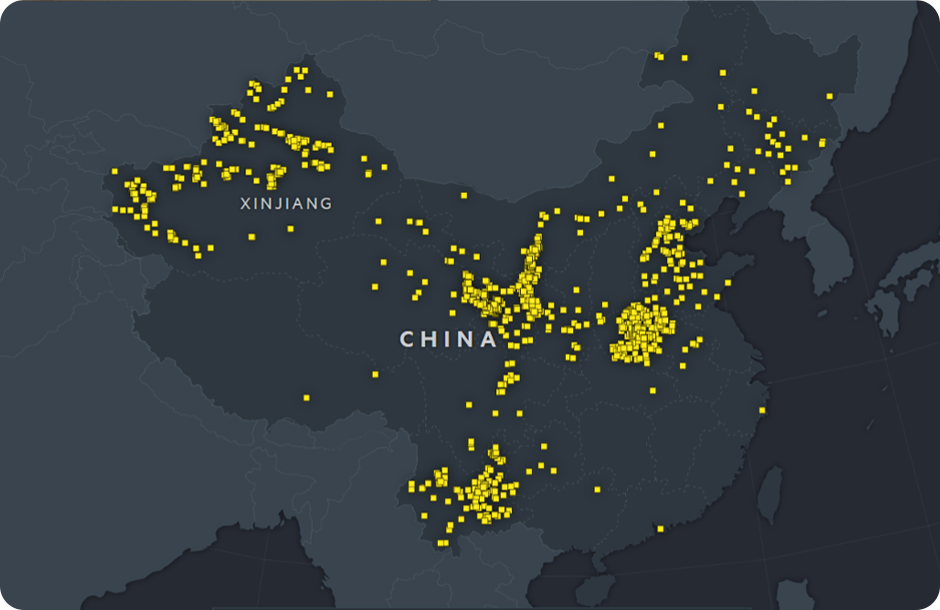
A map showing the mosques located in China today
In the early periods, some of the Muslims who arrived in China traveled along the Silk Road, while others preferred the maritime routes across the Indian Ocean. In fact, the earliest Muslim settlements in China were concentrated in these port cities. For this reason, the first minarets rose in coastal centers such as Quanzhou (Zaytun), Guangzhou (Canton), and Hangzhou (Khansa). Although these early mosques have not survived in their original form, written records, along with remains such as iwans and muqarnas, indicate that the earliest mosques—much like the Muslims themselves—retained a foreign character within the Chinese context. At that time, Muslims maintained strong connections with their lands of origin, and, as seen in many migrant Muslim communities today, they built their mosques in architectural styles that reflected their homelands. By contrast, the mosques along the Silk Road were constructed in periods when Muslims had become an integral part of Chinese society, advancing into the interior and gradually integrating with local culture. For this reason, I turned my route toward the northwest and set out on a long journey to visit these historical mosques, beginning from the Gobi Desert (near Dunhuang), which marks the gateway of the Silk Road into China.

Travel route based on the mosques i visited along the Silk Road
My first destination was Qinghai. In this region, where Tibetan Buddhists and Chinese Muslims coexist, the Hongshuiquan Mosque—a fifteenth-century structure—stood in a small village perched atop a vast mountain. Although a Hui Muslim friend I had contacted in Xining and his family were unaware of the mosque’s existence, they agreed to take me to the village. Finding the road, however, took us several hours. When we finally reached the village entrance and parked before a structure stretching along the roadside—one that bore a striking resemblance to Tibetan Buddhist monasteries—my friend remarked that this was the mosque we had been searching for. I still vividly recall the astonishment of that moment. Yet the feeling that overtook me upon passing through the entrance wall—adorned with motifs of lotus, pomegranate, and countless floral patterns—and stepping into the courtyard was of an entirely different order. The pagoda-style minaret rising at the center of the courtyard, together with the stillness that enveloped the space, immediately drew me in. That a structure which had appeared so unfamiliar from the outside could evoke such a profound sense of belonging upon entry moved me deeply. As I approached the prayer hall through a gate guarded by dragons and the mythical phoenix, the imam stopped me. He was surprised that, as a foreign visitor, I had learned of this mosque and had traveled such a distance to see it. He explained that he needed to check my passport and file a report—this was a routine procedure. What struck me even more, however, was noticing, in one corner of the courtyard, a team appointed by the state conducting research for the preservation of the mosque. After completing the formalities, I was granted permission to enter.
Inside the dimly lit yet serene prayer hall, the familiarity of the mihrab and prayer rugs—no matter how far I had traveled—instilled a sense of quiet peace. Decorative elements drawn from Buddhist, Taoist, and Islamic artistic traditions, along with geometric motifs, had been delicately woven into the wooden ceiling. Discovering what felt like a forgotten treasure atop a mountain in China filled me with a deep sense of joy.
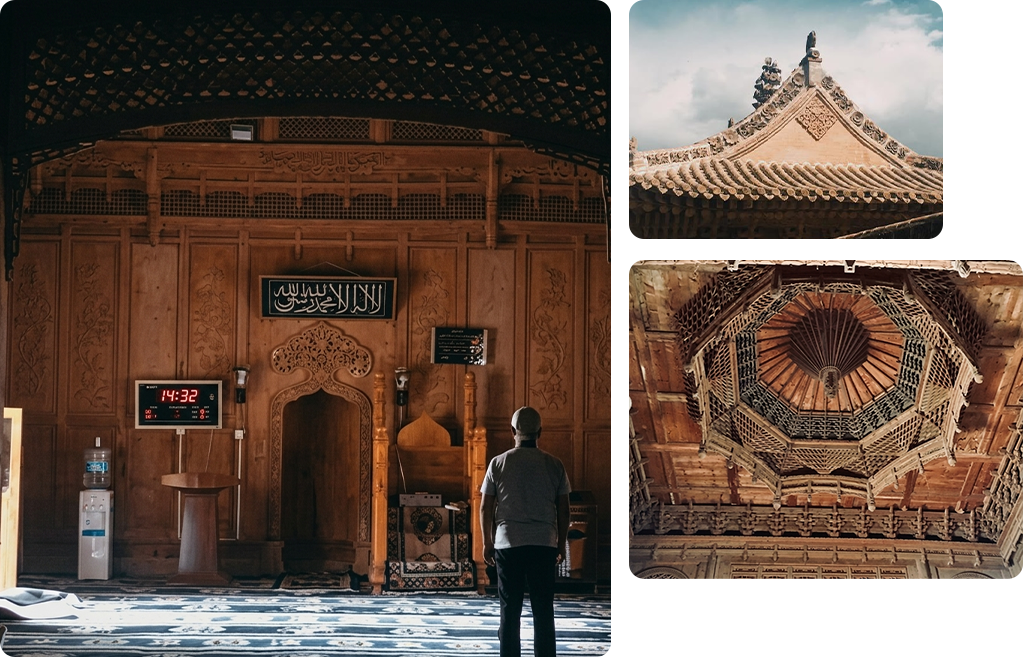
Interior area, dome, and interior details of Hongshuiquan Mosque*
My second stop in Qinghai was the Dongguan Mosque, which I located by following the Friday congregation that overflowed into the surrounding streets. I had previously encountered this mosque in the photographic archive of Claude L. Pickens, who had been active among Chinese Muslims in the 1930s, and I had hoped to find a historical structure resembling those images. Instead, the mosque before me—with its tall minarets and green dome—once again reminded me of the Huxi Mosque. After the congregation dispersed, I passed through the domed entrance flanked by two tall minarets and realized that the section I had been seeking stood modestly at the far end of the courtyard. There it was: the Dongguan Mosque in its older form, with its triangular roof and columns adorned in red, blue, and green in a distinctly Chinese style. Although the mosque is believed to have been first constructed during the Ming Dynasty in the fifteenth century, it had been destroyed and rebuilt several times over the centuries due to fires and rebellions. The minarets and domed entrance had been added during the most recent restoration in the 1980s. Filled with the excitement of having found what I was searching for, I approached the prayer hall—only to be stopped before I could even take a step inside. Members of the congregation informed me that women were not permitted to enter that section and denied me access. Despite my efforts to explain that I had traveled a great distance to see this mosque, I was turned away. Setting aside the disappointment of that moment, I wiped away my tears and began knocking on the doors of the rooms surrounding the courtyard, searching for the imam.
The imam, who welcomed me with a warm smile, listened attentively and then explained that, from his perspective, there was no objection to my entering the mosque. However, he added that a segment of the Muslim community in Xining opposed women entering the mosque altogether. Indeed, there was not even a designated space for women within the mosque. A separate room had been allocated for them nearby; if someone with the key could be found, it would be opened, otherwise women would perform their prayers collectively at home in the evening. Nevertheless, the imam, out of respect for the effort I had made to see the mosque, chose to accompany me. Although my presence caused renewed unease among some members of the congregation, he addressed me aloud with reassuring firmness: “Go ahead, my daughter—perform your prayer, see the mosque. I am here; I will wait for you.” The moment of entering the mosque filled me with such profound joy that, for an instant, the entire congregation seemed to fade from my awareness. Built in accordance with Chinese architectural principles and adorned in red and blue hues, the mosque—despite its unfamiliar outward form—whispered the same essential message: the unity of God (tawḥīd). After completing my observations and sitting briefly in contemplation, I quietly departed.
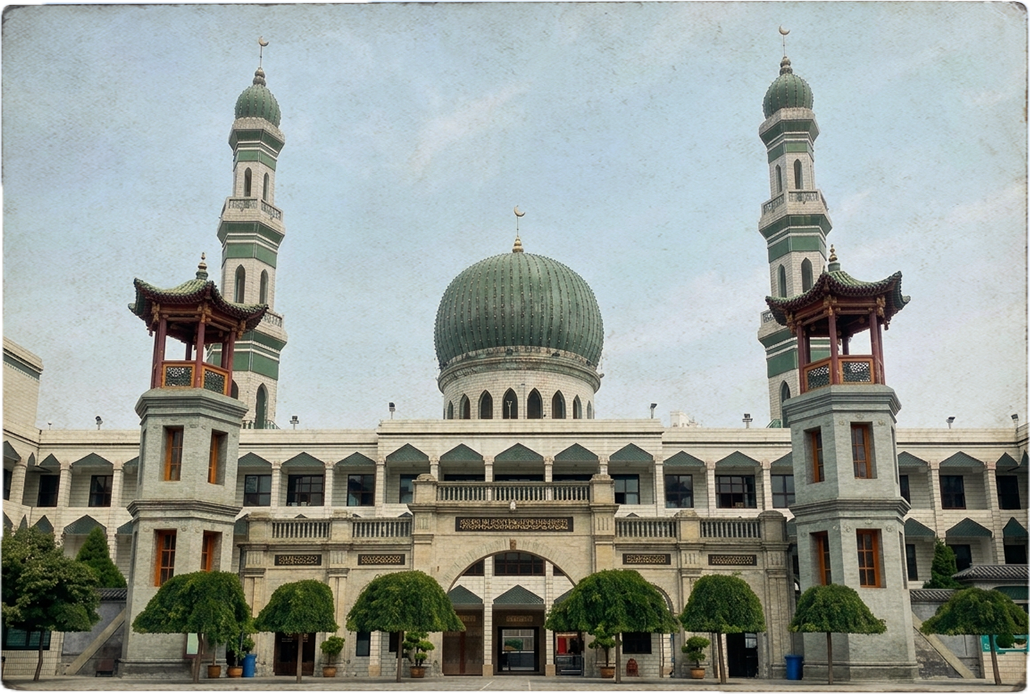
Both the architectural plurality of the Dongguan Mosque and the composition of its congregation left me deep in thought. As I moved through both the immediate surroundings of the mosque and the center of Xining, I often found myself wondering: Am I in China, or in a Muslim land that feels at once familiar and yet distinctly foreign? The streets of the city—home to a dense population of Chinese Muslims—were filled with men wearing white skullcaps and women in headscarves, and one could encounter a mosque almost every five hundred meters. Yet, despite this visible religiosity, women were largely absent from mosque spaces, and many of the structures evoked the architectural idiom of Saudi Arabia or the United Arab Emirates. At first, I assumed that these mosques might have been financed by external actors. However, my conversations with Chinese Muslims revealed a far more complex reality. On one occasion, when the family of a friend invited me to accompany them to a Chinese Muslim wedding in a Hui-majority village, we were joined in the car by two additional figures: a madrasa teacher known for his opposition to Sufism and an elderly relative marked by a strong anti-Saudi stance. The imam began by asking me a question that is famously common among Chinese Muslims: whether I liked shrimp. Although I had encountered this question repeatedly during my early months in China—without quite grasping its significance—I now understood its function. It was, in essence, a subtle test of whether one identified as a Sunni Muslim, more specifically within the Hanafi school. When I replied that I did not, thereby giving the expected answer, a faint smile of approval and recognition appeared on the faces of everyone in the car. With our shared ground thus established, I felt able to pose my questions more openly and raised the issue of mosque architecture. All those present affirmed that, in recent years, mosques had largely been financed by Chinese Muslims themselves and that the congregation actively preferred this architectural style. A significant portion of the Muslim community in Xining, they explained, believed that a “proper” mosque should possess a dome and minarets. The madrasa teacher identified himself with the mainstream Yihewani (Ikhwān) movement in Xining, known for its emphasis on a return to the Qur’an and hadith and for its generally critical stance toward Sufism. For this reason, he maintained that Chinese Muslims in the past had lacked sufficient religious knowledge and had, to some extent, assimilated into broader Chinese society, which led them to construct mosques in a Chinese style—though he nevertheless expressed respect for these historical forms. The elderly man, on the other hand, surprised me with his strong opposition to Salafism. He regarded it as a source of discord (fitna) and, at the same time, voiced criticism of the Yihewani movement as well. Following this conversation, I came to realize that religious thought among Chinese Muslims was far more diverse than I had initially assumed. As I reflected on the possible relationship between this diversity of religious interpretation and the variations in mosque architecture, I set out toward my next destination: Ningxia.
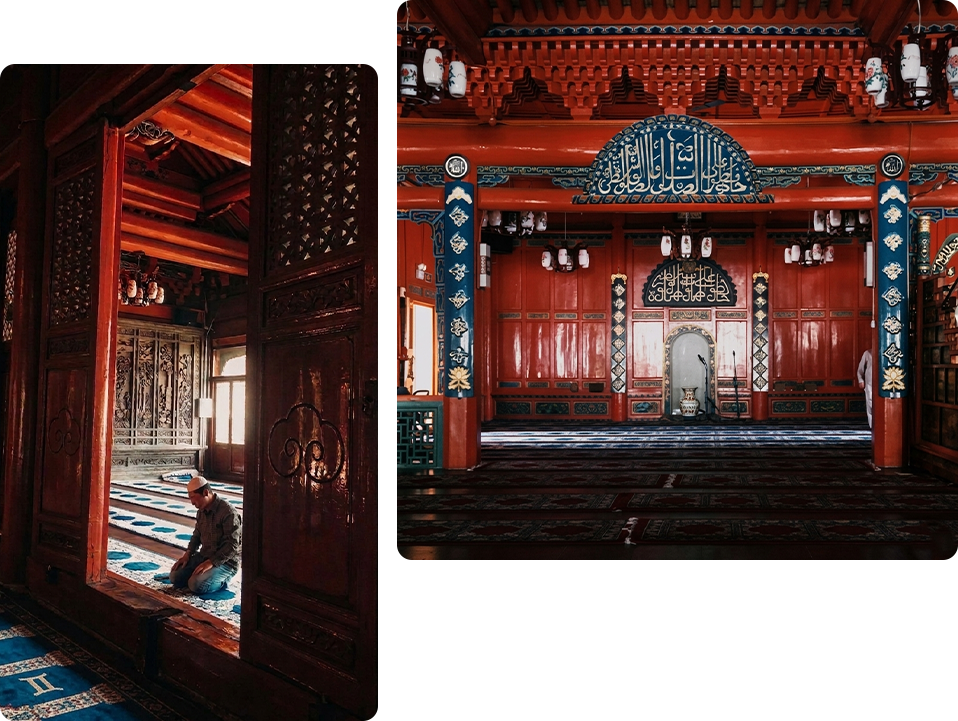
One of the five autonomous regions in China designated along ethnic lines, Ningxia is the homeland of Chinese Muslims, namely the Hui people. Although historical records and the photographic archive of Claude L. Pickens indicate the presence of numerous mosques in the region throughout history, many of these structures were destroyed during periods of wars and particularly during the Cultural Revolution. Consequently, most mosques were reconstructed after the 1980s in the now-familiar style of domes and minarets. For this reason, I made my way to the Najiahu Mosque, one of the rare examples that has survived to the present in a form faithful to its original design. Commissioned by the Na Family—Chinese Muslims who held prominent rank within the imperial court during the Ming Dynasty—this mosque stood out as an exceptional structure, both in its architectural composition and ornamental richness. Its entrance, adorned with motifs of lotus flowers, dragons, lion heads, bamboo, and Arabic calligraphy, also functioned as a minaret. During the Cultural Revolution, however, the mosque had been repurposed as a workshop and remained closed to worship for many years. It was only after the 1980s that it was carefully restored in accordance with its original form and reopened for religious use.
It seemed that such restrictions varied from one locality to another. This time, before entering, I sought out the imam, introduced myself, and, after explaining my purpose, obtained permission to go inside. The first element that drew my attention was the striking harmony between deep navy blue and golden tones. The mosque appeared almost as if it had been constructed within the depths of a night sky. Arabic calligraphy, rendered in a style harmonized with Chinese calligraphic aesthetics, shimmered like stars in gold ornamentation. The mihrab, too, possessed a distinctive elegance. As the call to prayer approached, some members of the congregation seemed uneasy at my presence, yet once I explained that I had received the imam’s permission, they left me undisturbed. Since no space had been designated for women, I stepped back into the courtyard when the time for prayer arrived. There, I listened first to the adhān, recited in a melodic mode characteristic of Chinese tradition. As the congregation began the prayer, I set out once more—this time toward Tongxin, located three to four hours from Yinchuan—to visit another historic mosque.
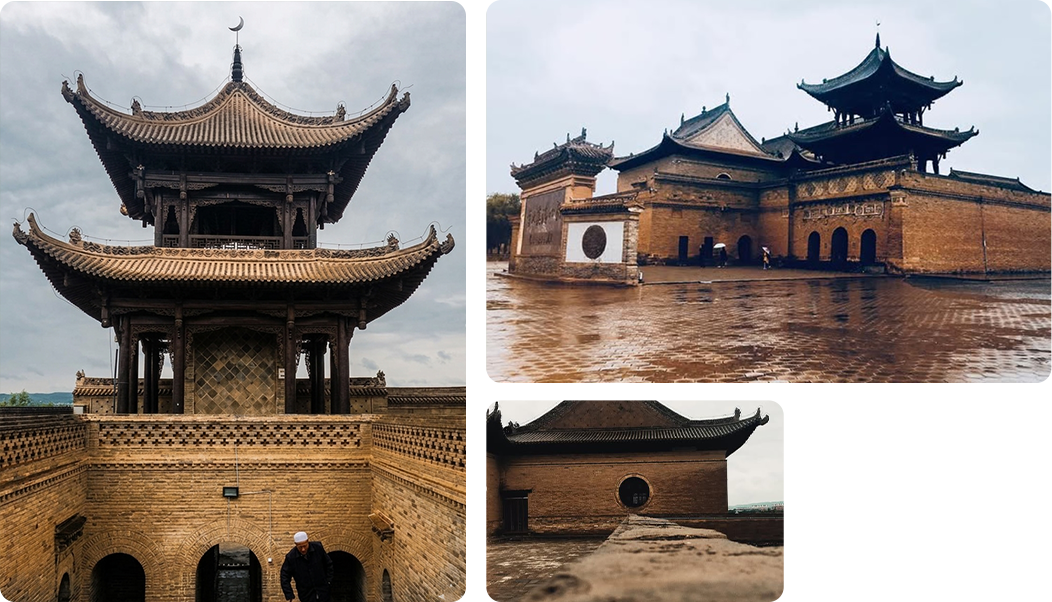
The Tongxin Mosque carries a particularly intriguing history. According to accounts, it was originally constructed in the fourteenth century during the Yuan Dynasty as a Buddhist temple. In the subsequent Ming period, as the Muslim population in the region grew, the structure was presented to the community and converted into a mosque. In the 1930s, it is said that Chinese Muslims sheltered members of the Red Army within its walls and even allowed certain revolutionary meetings to be held there. Perhaps for this reason, the mosque continues to hold a particular significance for the Communist regime, and its historical fabric has been carefully preserved. As I sat quietly in a corner, reflecting on how a structure that outwardly resembled a fortress could contain such an atmosphere of refinement and spiritual depth within, I was startled by the voice of my companion. “Would you like to visit another mosque,” he asked, “one whose story is at least as remarkable as that of Tongxin, even if its architecture is not as old?” I knew immediately what he meant: Honggangzi Mosque—the center of the Khufiyya (Hufiyya) order, visited each year by Muslims from many parts of China and often described as the “Mecca” of the Ningxia Hui Autonomous Region.
I had previously heard numerous accounts concerning the Honggangzi Mosque, which also houses the tomb of Sheikh Hong Shoulin. My Chinese Muslim friends—particularly those with a more formal religious education—approached both this ṭarīqa and the mosque with marked caution. According to prevailing narratives, Hui Muslims, especially those living in rural areas and practicing Islam in a more culturally embedded manner, displayed a particular devotion to this shrine. It was even recounted that, at one time, certain religious figures had gone so far as to promise places in paradise in exchange for money. According to written sources, however, the mosque was not only a significant center for Chinese Sufism but was also known for having supported the Red Army during its Western campaigns. Despite these accounts, my companion—who was driving—expressed hesitation about visiting the site, which, in turn, unsettled me. After a long journey through the rural expanses of Tongxin, the mosque finally appeared in the distance, standing in the middle of a vast and desolate landscape, marked by its green dome and minarets. My companion, reminding me that I might not be admitted as a foreigner, dropped me off some distance away. As I approached the entrance, I was stopped by two imposing figures—remarkably tall and broad-shouldered, in a manner rarely encountered in China—who questioned my purpose for visiting. Though initially suspicious, they eventually allowed me to enter on the condition that I refrain from taking photographs.
At first, I struggled to understand the prohibition on photography. Yet once inside, the scene before me rendered it entirely comprehensible. Unlike the other mosques I had visited, the courtyard here contained name tablets and incense burners resembling those found in Chinese temples. The air was thick with smoke and scent, as visitors moved through the courtyard and around the tomb, waving incense in ritual gestures. The surrounding walls, in both their color and form, closely resembled those of a Daoist temple. It seemed likely that, due to internal criticism among Chinese Muslims regarding such practices, there was a reluctance to project these images outward. Although I was followed by several large men throughout the courtyard, they ceased their watch once I entered the tomb. To view it, one had to descend to a lower level. At first, the sounds emanating from below unsettled me. Yet upon entering, I realized that these sounds came from the sharpening of knives used to cut strips of cloth, and from individuals murmuring prayers in varied melodic modes as they tied these cloth pieces to designated spots. Once again, the diversity of religious understanding among Chinese Muslims led me into deep reflection. Still, I felt a certain gratitude for having been allowed entry despite my foreignness, especially as I had heard that many visitors had been turned away. As I left the mosque and returned to the car, I could not help but tell my companion that his apprehension had been unnecessary. Yet as we departed from the Honggangzi Mosque—its green dome and minarets concealing a far more complex inner reality—I found myself unable to fully articulate the impressions it had left upon me. With these unresolved reflections, I set out toward my final destination: the Great Mosque of Xi’an.
One of the most ancient cities in China, Xi’an also marks the final great stop of the Silk Road within Chinese territory. For this reason, many Chinese Muslims have settled here throughout history, and the most visible and concentrated expressions of Islamic culture in China are to be found within this city. As I entered the historic Huihui (Muslim) bazaar—one of the most renowned quarters of Xi’an, where narrow streets open into one another—I felt as though I had stepped into a world of fable. On one side were shops selling Arabic–Chinese calligraphy rendered in Chinese stylistic forms; on the other, artisans painting with ink-stained fingers, copper craftsmen at work, and stalls offering the distinctive flavors of Chinese Muslim cuisine, beverages, and a wide variety of teas. As I moved through these narrow streets—where colors, sounds, and scents intertwined—I suddenly found myself within a funeral procession of Chinese Muslims. In a street too crowded for easy passage, the deceased was carried upon a white cloth stretched between two poles, while relatives—dressed in garments reminiscent of the shroud followed with lamentations. Although encountering such a procession in the midst of a bustling marketplace initially unsettled me, the attire of the mourners and the practice of carrying the deceased through the bazaar revealed how even funerary rites, shaped by Confucianism, had become deeply integrated with Chinese cultural forms. In the end, it was this very procession that signaled I was nearing the Great Mosque of Xi’an.
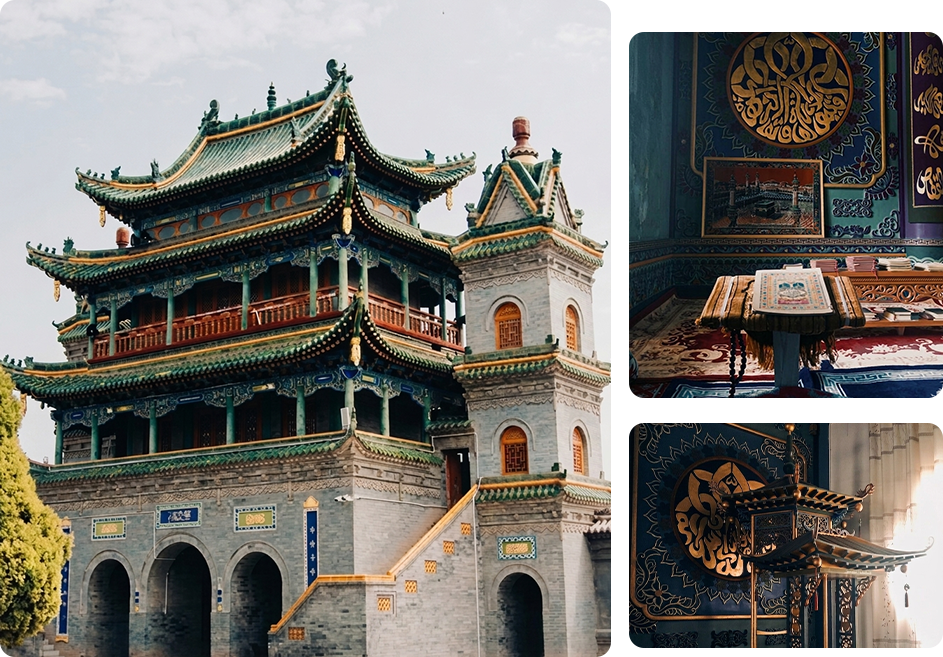
After a short while, I found the mosque, enclosed by high walls reminiscent of imperial Chinese palaces. Upon passing through the gate, I was met by a vast courtyard carefully arranged with trees and vegetation. The courtyard unfolded in successive layers; as one passed from one wooden passageway to another—each arranged in accordance with Chinese architectural principles—the bustle of the market outside gradually receded into the background. Once again, my mind was drawn into the peculiar enchantment of a place that felt at once familiar and foreign. Small pavilion-like structures evoking palace architecture, stone steles mounted upon sculpted tortoises, a pagoda-style minaret, and Islamic inscriptions rendered in Chinese script appeared in sequence throughout the courtyard. As I approached the final section, large dragon motifs carved into stone emerged beneath my feet—symbols that likely indicated the mosque’s protection under imperial patronage. At the end of the courtyard, the mosque stood in all its grandeur, with its turquoise roof and dark wooden structure commanding attention.
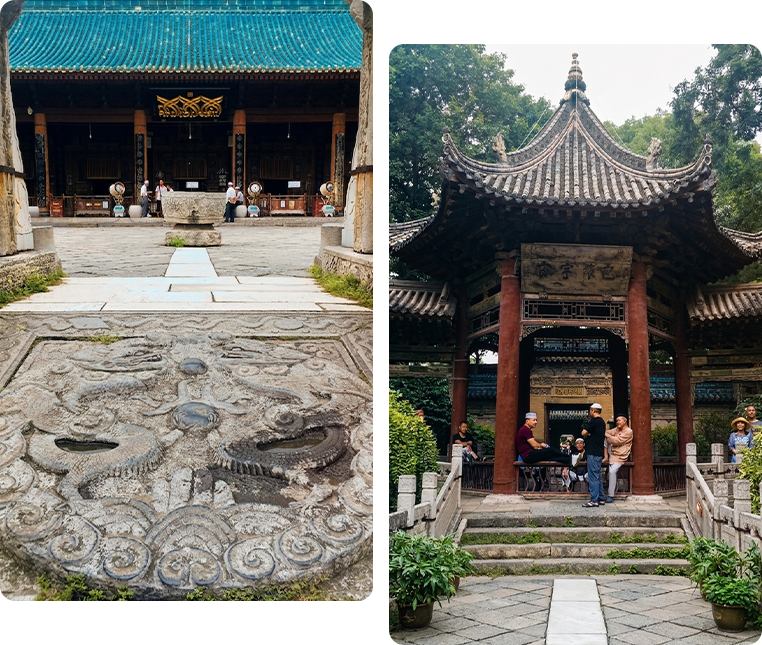
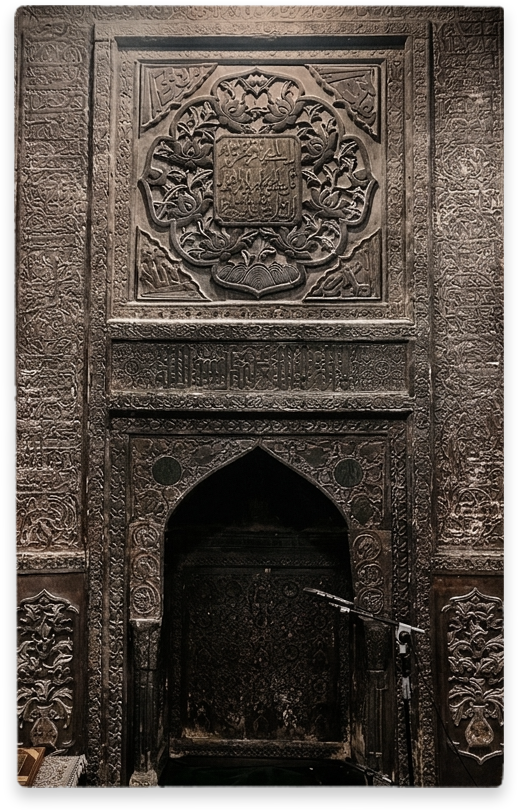
At the edges of its triangular roof, mythical animal figures characteristic of Chinese architecture had been placed, while the entrance gate was adorned with exquisitely detailed carvings. Regarded as one of the oldest mosques in China, the Great Mosque of Xi’an presented, both in its courtyard and interior, one of the most refined expressions of Sino-Islamic architecture. The ceiling, decorated with stylized floral motifs, and the wooden walls inscribed with Qur’anic verses elevated this aesthetic harmony to its apex. The mihrab, adorned with pomegranates, lotus flowers, and a rich variety of vegetal designs, possessed a distinctive elegance. In this space, where spirituality seemed to find expression through wood, it was as though paradise had been imagined through the aesthetic sensibilities of a Chinese artisan.
What I encountered in this mosque represented, in many respects, the most mature articulation of the shared aesthetic language I had observed throughout my journey. Chinese Muslims had not hesitated to incorporate motifs such as chrysanthemum, lotus, and bamboo—symbols associated with abundance, mercy, and virtue. Likewise, in the exterior ornamentation of historical mosques, the dragon—an indispensable element of Chinese architecture symbolizing power and benevolence—and the phoenix, regarded as an emblem of wisdom, refinement, and integrity, were employed without hesitation. Pagoda-style minarets and window decorations reflected a synthesis of both Central Asian and Chinese geometric traditions. As in broader Chinese architecture, wood and stone were used in conjunction, and spatial perception emphasized horizontality and breadth rather than verticality.
As I sat in a corner of the courtyard, attempting to gather my thoughts, I noticed a group of Chinese and foreign tourists waiting at the entrance, trying to gain access to the mosque. As in nearly every mosque I had visited in China, only Muslims were permitted to enter the prayer hall. In truth, the key to entry was often as simple as uttering “al-salāmu ʿalaykum.” This phrase—shared with me by friends—had opened many doors along my journey. Yet observing that it did not always suffice when uttered by tourists made me smile; some attempted to imitate Muslims in order to gain entry. While those outside tried to glimpse the interior through the narrow opening of the door, I found myself once again reflecting on the Huxi Mosque in Shanghai. Throughout this long journey—sometimes alone, sometimes with the assistance of Chinese Muslim friends in different cities—I had gathered not only photographs of Islamic heritage in China, but also a series of questions. Why did Chinese Muslims seem reluctant to sustain this distinctive architectural tradition? Or were they truly reluctant—or was there, rather, a far more complex interplay of religious, political, and social tensions at work?
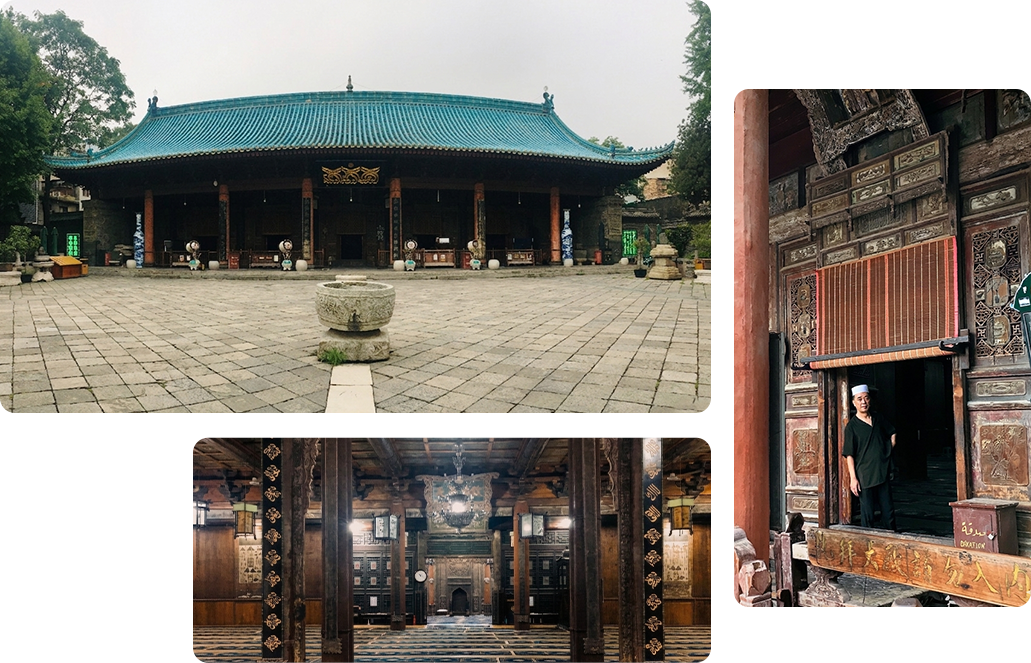
Entrance and interior details of the Great Mosque of Xi’an*
A few months after leaving China, I learned that the government had initiated a policy of removing domes and minarets. The authorities viewed such features as signs of “Arabization” among Chinese Muslims and advocated instead for the “Sinicization” of Islam. Upon hearing this, I realized that the photographs I had taken were not merely records of a personal journey, but also documents bearing witness to a historical moment. Although time constraints had prevented me from visiting the coastal mosques before returning to Turkey, the questions that emerged during this journey—undertaken through the İSAM scholarship—would, in the next stage, evolve into a postdoctoral research project, marking the beginning of a new chapter in my academic work, which I would continue in the United States.
* The copyright for the photographs featured in this article belongs to our author, Esra Çiftci.
|
Esra Çifci Esra Çifci completed her undergraduate studies at the Faculty of Theology, Marmara University, between 2008 and 2012. In the same year, she began her master’s studies in the Department of History of Religions at the same university, where she prepared her thesis titled “The Emergence and Development of Confucian Muslims in the Context of Islam and Confucianism” (2015). In 2015, she commenced her doctoral studies in the field of Philosophy and Religious Studies at Marmara University. During this period, she completed a short-term internship as an assistant coordinator at the Muslim Council of Britain (2014). In 2017, she further deepened her research on East Asian religions at the International Islamic University of Malaysia. In 2018, she participated in the Researcher Training Program (AYP) at the Turkish Religious Foundation’s Centre for Islamic Studies (İSAM). In 2019, she pursued one year of Chinese language education at Fudan University in Shanghai. During her doctoral studies, she examined “The Influence of Confucianism on Enlightenment Thought and Modern Western Philosophy”, and in 2024, she completed her dissertation titled “Debates on the Religious Nature of Confucianism in the 16th to 18th Centuries”. Currently, she is conducting her postdoctoral research at the University of North Carolina. |
Esra Çifci
Esra Çifci completed her undergraduate studies at the Faculty of Theology, Marmara University, between 2008 and 2012. In the same year, she began her master’s studies in the Department of History of Religions at the same university, where she prepared her thesis titled “The Emergence and Development of Confucian Muslims in the Context of Islam and Confucianism” (2015). In 2015, she commenced her doctoral studies in the field of Philosophy and Religious Studies at Marmara University. During this period, she completed a short-term internship as an assistant coordinator at the Muslim Council of Britain (2014). In 2017, she further deepened her research on East Asian religions at the International Islamic University of Malaysia. In 2018, she participated in the Researcher Training Program (AYP) at the Turkish Religious Foundation’s Centre for Islamic Studies (İSAM). In 2019, she pursued one year of Chinese language education at Fudan University in Shanghai. During her doctoral studies, she examined “The Influence of Confucianism on Enlightenment Thought and Modern Western Philosophy”, and in 2024, she completed her dissertation titled “Debates on the Religious Nature of Confucianism in the 16th to 18th Centuries”. Currently, she is conducting her postdoctoral research at the University of North Carolina.