
Seyyid Muhammad Naquib
al-Attas
A Contemporary Defender of the Islamic Worldview

Tayfun Akgün
Seyyid Muhammad Naquib al-Attas
A Contemporary Defender of the Islamic Worldview
Tayfun Akgün
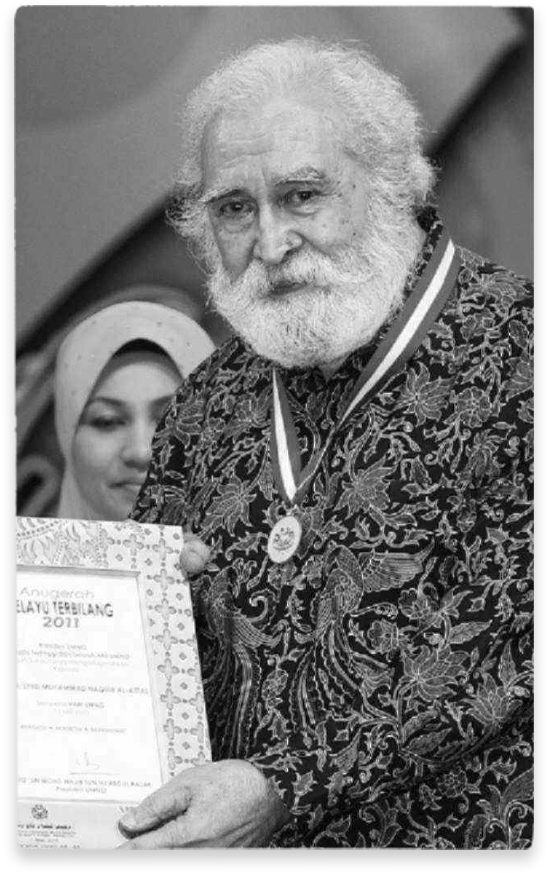
Prof. Tan Sri Seyyid Muhammad Naquib al-Attas, one of the foremost contemporary Muslim intellectuals and among the most prolific figures in the Islamic scholarly and intellectual tradition, passed away in Kuala Lumpur on Sunday, 8 March 2026 (18 Ramadan 1447 AH) at the age of ninety-five. Following the funeral prayer performed on Monday morning at Masjid al-Taqwa, he was laid to rest at Tanah Perkuburan Islam Bukit Kiara. His passing constitutes a significant loss not only for the Malay-Muslim world but also for the broader landscape of modern Islamic thought.
A remarkably prolific scholar and man of letters, al-Attas produced an extensive body of work spanning Islamic metaphysics, Sufism, literature, history, and education. His writings are distinguished by original and influential interpretations, comprehensive theoretical formulations, and profound analytical depth. As Alparslan Açıkgenç (2021) has observed, al-Attas should be regarded as a system philosopher, with Islam occupying the very center of his intellectual system. By redefining the fundamental and key concepts of Islam through an authentically Islamic conceptual framework, he sought to establish the predominance of an Islamic worldview (Weltanschauung). To this end, he subjected secularism and secularization—which he regarded as inseparable from the intellectual foundations of Western civilization—to a profound philosophical critique and rejected them in their entirety. Likewise, throughout his academic career, he consistently advanced rigorous and systematic criticisms of Orientalist assumptions and theories.
In response to the challenges posed by the secular worldview and Orientalism, al-Attas emerged as one of the leading exponents of the project of Islamization, or what he also conceived as the de-Westernization of knowledge. Within his intellectual framework, Islamization functions both as a comprehensive critique of the secular order and as its intellectual antidote. Central to his conception of Islamization are the definition and objectives of education in the Muslim world, together with a coherent understanding of the nature of knowledge and the classification of the sciences, all of which occupy a pivotal position in his thought.
Life, Academic Career, and Scholarly Activities
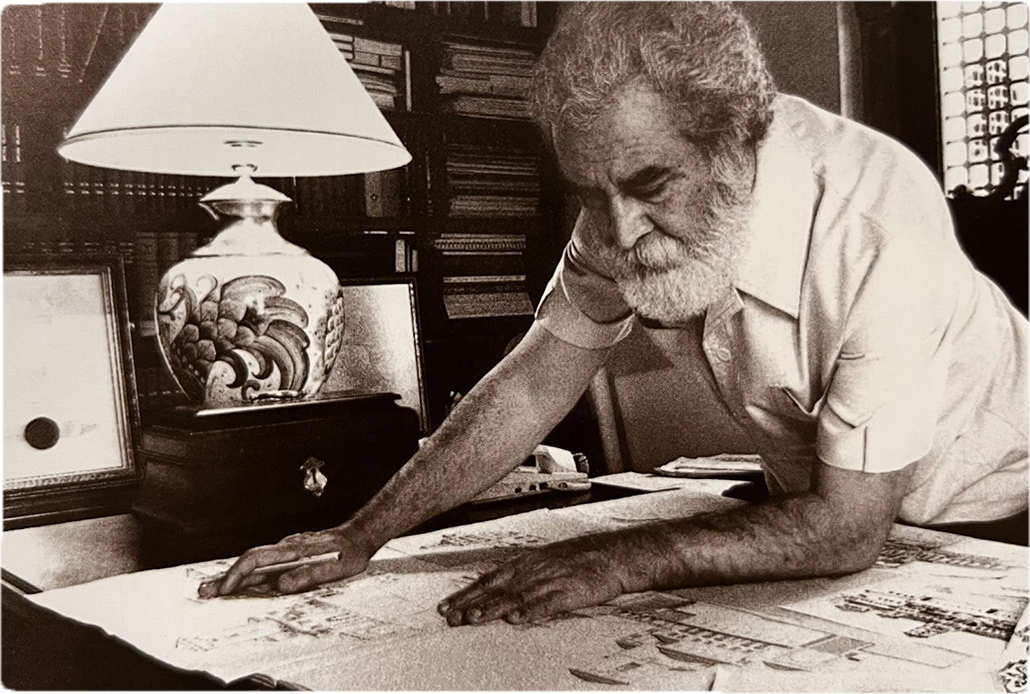
Seyyid Muhammad Naquib al-Attas was born on 5 September 1931 in Bogor, West Java, Indonesia. His mother, Raquan al-Aydarūs, belonged to a Sundanese family from the Sukapura region of East Java, while his father, Sayyid Ali, was a member of the al-Attas branch of the Hadrami Bā ʿAlawī family, whose ancestors had migrated from Yemen to the Indonesian archipelago. His grandfather, Ḥabīb ʿAbdullāh ibn Muḥsin al-Attas (1840/41–1933), was a renowned Sufi master and religious scholar in the region.
During a visit to Johor, Malaya, in 1890, Ḥabīb ʿAbdullāh married Rukiye Hanım, a woman of Circassian origin. According to a widely circulated tradition, Rukiye Hanım was one of the two female attendants presented by Sultan Abdülhamid II to Sultan Abu Bakar of Johor. The other was Hatice Hanım. Sultan Abu Bakar married Hatice Hanım, while his brother, Ungku Abdul Majid, married Rukiye Hanım (Alatas 2024; Akgün 2025). Following Ungku Abdul Majid’s death in 1889, Rukiye Hanım entered into a second marriage with Ḥabīb ʿAbdullāh, from which Sayyid Ali was born. The internationally renowned Malaysian sociologist and public intellectual Syed Hussein Alatas (1928–2007) was another son of Sayyid Ali and thus the elder brother of Naquib al-Attas. Although based primarily on oral family tradition, it is often maintained that, through his paternal grandmother Rukiye Hanım, al-Attas possessed a familial connection with the Ottoman Empire.
Al-Attas received his early education in Sukabumi, Indonesia, and later in Johor, Malaya. Between 1952 and 1955, he studied at the Royal Military Academy Sandhurst in England. After completing his undergraduate studies at the University of Malaya, he earned an M.A. from McGill University in 1962 and a Ph.D. from the School of Oriental and African Studies (SOAS), University of London, in 1966. Both his master’s and doctoral research focused on Sufism and Islamic thought in the Malay world. His enduring interest in Sufism and the Islamic intellectual history of the Malay Archipelago took shape during his undergraduate and graduate years.
During his postgraduate education, al-Attas had the opportunity to benefit from the scholarship of leading authorities on Islam and the Islamic world, including Fazlur Rahman, Toshihiko Izutsu, Martin Lings, Hamilton Gibb, A. J. Arberry, Mortimer Wheeler, and Richard O. Winstedt. While he drew upon the philological methods and academic rigor characteristic of Orientalist scholarship, he simultaneously developed a critical and distinctly anti-Orientalist discourse toward Western culture and civilization. It is for this reason that Mona Abaza (1999, p. 199) famously characterized al-Attas as an “anti-Orientalist Orientalist.”
Upon completing his doctoral studies, al-Attas returned to Malaysia and embarked on his academic career in the Department of Malay Studies at the University of Malaya. Between 1968 and 1970, he served as Dean of the Faculty of Arts at the same institution. The 1970s and 1980s constituted the most intellectually productive period of his scholarly life. During these decades, several developments—including the new economic and cultural policies implemented in Malaysia following the 13 May 1969 ethnic riots between the Malay and Chinese communities, the resurgence of Islamic reform movements across the Muslim world, and the emergence of modernist Islamic organizations in Malaysia such as ABIM (Angkatan Belia Islam Malaysia)—provided a favorable environment for the wider dissemination of his ideas.
In this context, his mentor–disciple relationship with Anwar Ibrahim proved particularly significant in enabling his intellectual vision to gain social and political resonance. Al-Attas was among the founding figures of the National University of Malaysia (Universiti Kebangsaan Malaysia) in 1970, and in 1973 established within the university the Institute of Malay Language, Literature, and Culture. In 1987, he founded the International Institute of Islamic Thought and Civilization (ISTAC) in Kuala Lumpur, serving as its director until 2002. ISTAC became the principal institutional embodiment of al-Attas’s philosophy of education and his project of the Islamization of knowledge, providing an important center for advanced Islamic scholarship.
Al-Attas’s Critique of Secularism and Secularization
Within contemporary Muslim intellectual discourse, three principal approaches to secularization may be identified: the fundamentalist, the accommodationist, and the rejectionist. According to the first, secularism functions as a criterion governing almost every sphere of Muslim social life. The second maintains that Islam and secular thought may be reconciled in certain respects. The third, by contrast, argues that no genuine reconciliation between Islam and secularism is possible. Al-Attas stands among the foremost representatives of this rejectionist position.
Al-Attas approaches the questions of secularism and secularization primarily from an intellectual and philosophical perspective. In his view, secularism is an ideology that obstructs the realization of the Islamic worldview and profoundly shapes the cultural and intellectual structures of the Muslim world; consequently, it must be critically examined, challenged, and ultimately transcended (Aljunied 2019). He defines the concept of the secular, which simultaneously evokes the notions of time and world, as the condition of the world within a particular historical moment—that is, its contemporary state (al-Attas 2025, 40). As a historical, philosophical, and scientific process, secularization signifies “the liberation of man, first from religious and subsequently from metaphysical control over his reason and language.” In this process, humanity’s orientation shifts from transcendence toward the present world and the immediate temporal order, while sacred symbols and supernatural references are progressively eroded. Affecting virtually every sphere of life, secularization may therefore be understood as “an irreversible historical process through which society and culture are liberated from the domination of religious control and closed metaphysical worldviews.” Ultimately, spiritual meaning is detached from the natural order, politics is desacralized, and values lose their transcendent foundations. In short, secularization denotes “the removal of religious and metaphysical foundations and the abandonment of man to himself” (al-Attas 2025, 41–43; al-Attas 2018, 88).
According to al-Attas, secularism emerged from the reconciliation of divergent conceptions of time and space inherited from the Greco-Roman tradition, Jewish heritage, and Western Christianity. Its origins should be sought not so much in the Bible itself as in its interpretation by Western intellectuals and theologians and in the prolonged metaphysical conflict between the religious worldview and a purely rationalistic conception of reality (al-Attas 2025, 41–42). For al-Attas, understanding the very conditions that gave rise to Western culture and civilization necessarily requires an understanding of the historical process of secularization. Over time, the secular ideology itself transformed Christianity, fundamentally reshaping its intellectual and cultural orientation (al-Attas 2025, 45–47).
Al-Attas categorically rejects the Western claim that its own conception of civilization and knowledge represents the driving force behind humanity’s progress, as well as its attempt to impose secularization as a universal paradigm for interpreting all religions and civilizations. He argues that secularism is an ideology developed in opposition to the centrality of religion in human existence; indeed, he describes it as “a deadly poison that destroys true faith (īmān)” and maintains that it is fundamentally incompatible with Islam (al-Attas 2025, 49–51). For, as he states, “the Islamic worldview encompasses both this world and the Hereafter; the worldly dimension must be profoundly and inseparably related to the dimension of the Hereafter, while the latter possesses ultimate and final significance” (al-Attas 2018, 1).
According to al-Attas, secularism and secularization have produced four principal consequences within the intellectual life of Muslims: (i) the internalization of a dualistic worldview that separates matter from spirit; (ii) the emergence of confusion and disorder in the realm of knowledge; (iii) the proliferation of misguided and intellectually deficient leadership as a consequence of such confusion; and (iv) the creation and adoption of alien concepts that are contrary to the very spirit of Islam (Aljunied 2019, 646). Islam, however, recognizes no such dichotomy between the sacred and the profane or between matter and spirit. In al-Attas’s view, the modern knowledge produced and universalized by the West “is not knowledge in its essential and authentic sense; rather, it is knowledge infused with Western culture and civilization, animated by its spirit, and seductively directed toward its own purposes” (al-Attas 2025, 57).
Consequently, the establishment of a genuinely Islamic philosophy of education requires the critical redefinition, clarification, and reordering of concepts, terminologies, and values that originate within the Western intellectual tradition. Against this background, al-Attas formulated the project of the Islamization of Knowledge as both a critique of and an alternative to secularism and secularization, thereby constructing a holistic educational philosophy grounded in the normative values of Islam.
The Islamization of Knowledge, or
the De-Westernization of Knowledge
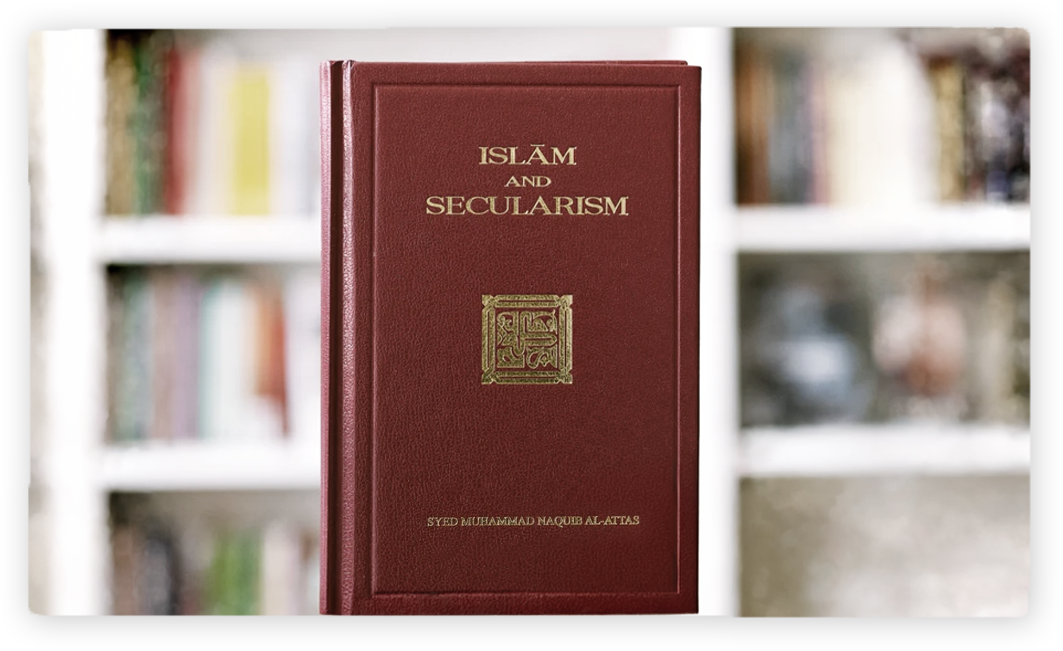
The First World Conference on Muslim Education, held in Mecca between 31 March and 8 April 1977, is widely regarded as the point of departure for the Islamization of Knowledge movement. Bringing together scholars, educators, and academics from across the Muslim world, the conference was devoted to examining the nature of education and the challenges confronting it. Among its most distinguished participants were Ismāʿīl Rājī al-Fārūqī (1921–1986), Seyyed Hossein Nasr (b. 1933), and Syed Muhammad Naquib al-Attas. At the conference, al-Attas presented a paper entitled “Preliminary Thoughts on the Nature of Knowledge and the Definition and Aims of Education.” The ideas advanced in this presentation subsequently formed the nucleus of both a major chapter in his best-known work, Islam and Secularism (1978), and his influential volume The Concept of Education in Islam: A Framework for an Islamic Philosophy of Education (1980). These works would later become foundational texts for his philosophy of education and his broader intellectual project of the Islamization of Knowledge.
Al-Attas defines Islamization as “the liberation of man, first from magical, mythological, animistic, and tribal cultural traditions, and subsequently from secular domination over his reason and language” (al-Attas 2025, 222).
He maintains that the process of Islamization in the Malay world commenced with the spread of Islam throughout the region and emphasizes the intrinsic relationship between Islamization and Islamic civilization. In his view, “Islamic civilization is a civilization that has emerged from within the diverse cultures of the Muslim peoples of the world through the penetration of the essential principles of the religion of Islam… This process of emergence is called Islamization… The fundamental and commendable elements of pre-Islamic civilizations that unite peoples and are deemed compatible with Islam become integrated into Islamic civilization… Thus, Islamic civilization represents not only unity in diversity but also diversity within unity.” (al-Attas 2011, xv)
One of al-Attas’s principal criticisms concerns the hegemony of secular knowledge within Muslim societies. He defines the Islamization of knowledge as the process by which the human being, in both material and spiritual dimensions, is liberated from secular modes of thought and systems of knowledge. This liberation possesses individual, societal, and historical dimensions. As language undergoes Islamization, patterns of thought and structures of reasoning likewise acquire an Islamic character. Consequently, the human being, freed from the shackles of secularism, returns to his original nature (fiṭrah) (al-Attas 2025, 68). The Islamization of language therefore signifies the end of the injustice that human beings inflict upon themselves by neglecting their primordial responsibilities toward God and His Messenger.
Al-Attas also adopts a critical stance toward attempts to reconcile Islam with the modern sciences as developed within the Western intellectual tradition. In his view, it is misleading to accept modern knowledge as it stands and then expect its Islamization merely by appending certain Islamic principles and disciplines in a superficial manner. Such an approach cannot remedy a structure of knowledge that is fundamentally shaped by secular assumptions and imbued with intellectual distortions. Rather, before knowledge can be reformulated within an Islamic framework, the secular concepts and epistemological assumptions embedded within it must first be thoroughly removed (al-Attas 2025, 179).
Accordingly, the Islamization of knowledge signifies liberation from secular concepts and modes of knowing, together with the establishment of a comprehensive understanding of knowledge and education governed by Islamic values and the Islamic worldview. Al-Attas contends that this objective can only be realized through an educational system and a philosophy of education firmly grounded in Islamic foundations.

Al-Attas’s Philosophy of
Education (Taʾdīb)
Al-Attas identifies three fundamental and existential crises confronting the Muslim world: (i) confusion and error in knowledge, (ii) the loss of adab (proper discipline and right conduct), and (iii) the emergence of incompetent and spurious leadership. These three crises, he argues, constitute a vicious circle, each reinforcing the others. The root cause of the problems facing the Muslim world lies in the confusion surrounding knowledge and the consequent loss of adab. The rise of unqualified leadership is itself a direct consequence of these two conditions. For the disappearance of adab gives rise not only to disorder, injustice, and oppression but also to profound confusion regarding the true nature of Islam and religious truth. The only way to break this vicious circle, according to al-Attas, is to confront directly the problem of the loss of adab (al-Attas 2025, 125).
The term adab fundamentally signifies an invitation. The Prophetic tradition narrated from Ibn Masʿūd—“Indeed, this Qur’an is the banquet of God on earth; therefore, partake of His banquet”—clearly illustrates this invitational dimension of adab. Whoever responds to this invitation comes to know his proper place and station. A person endowed with adab is one who possesses knowledge of the proper place of every being and every thing and therefore possesses wisdom (ḥikmah). Within al-Attas’s intellectual system, adab is defined as “the discipline that enables a person to recognize and acknowledge his proper place in accordance with his physical, intellectual, and spiritual capacities and potentialities” (al-Attas 2025, 203). Recognition corresponds to knowledge of one’s rightful place, while acknowledgment is the practical embodiment of that knowledge through action. Hence, “in Islam, neither knowledge unaccompanied by action nor action unguided by knowledge possesses any real value” (al-Attas 2025, 205).
Throughout his academic career, al-Attas argued that the misuse of fundamental and key concepts is not merely a linguistic issue but an obstacle to the correct understanding of the Islamic worldview. Consequently, a foundational concept such as education requires precise and rigorous definition (al-Attas 2025, 195). In his view, the commonly employed terms tarbiyah and taʿlīm do not adequately express the full Islamic conception of education. Tarbiyah encompasses not only human beings but also plants, animals, and even minerals, referring primarily to physical growth and material development. For this reason, al-Attas maintains that taʾdīb, which he defines as “the instillation and imparting of adab into the human being,” constitutes the most accurate equivalent of education (al-Attas 2025, 169). Unlike tarbiyah, taʾdīb emphasizes knowledge (ʿilm) rather than merely nurture or compassion, while integrating both its theoretical and practical dimensions. Since ʿilm is fundamentally the definition and apprehension of truth, taʾdīb—or education—is “the gradual inculcation in man of the recognition and acknowledgment of the proper places of things within the order of creation, which consequently leads to the recognition and acknowledgment of the proper place of God within the order of being and becoming” (al-Attas 2025, 203).
Having established education within this conceptual framework, al-Attas proceeds to discuss the definition of knowledge, the classification of the sciences, and ultimately the nature of an authentically Islamic educational institution. All knowledge originates from God, and knowledge itself is defined as “the arrival of the meaning or form of a thing into the soul” as well as “the arrival of the soul at the meaning of a thing” (al-Attas 2025, 199). Just as existence itself is characterized by hierarchy and order, so too is knowledge. Consequently, al-Attas rejects the egalitarian conception that weakens legitimate authority and hierarchy within the epistemic order, maintaining instead that knowledge is not relative but truth-centered: “knowledge is either true or false; either right (ḥaqq) or wrong (bāṭil)” (al-Attas 2025, 126).
Corresponding to the dual constitution of the human being—comprising both spiritual and bodily dimensions—knowledge is likewise divided into two categories. The first consists of knowledge bestowed by God through revelation, which is indispensable for guidance and salvation and therefore obligatory upon every Muslim (farḍ ʿayn). This category encompasses all the religious sciences. The second consists of acquired (kasbī) knowledge, including the rational and philosophical sciences, which is required only of certain members of the Muslim community and therefore falls under the category of farḍ kifāyah (al-Attas 2025, 217). Whereas farḍ ʿayn knowledge constitutes the very nourishment and life of the soul, farḍkifāyah knowledge serves as an instrument that facilitates and gives meaning to human life in this world. Acquired knowledge, however, possesses no autonomous normative authority; it must remain subordinate to the knowledge transmitted through divine revelation.
According to al-Attas, the ultimate objective of knowledge and education is not the production of “a good citizen” but rather “a good human being”—that is, in Islamic terminology, an individual who has attained the ideal of al-insān al-kāmil (the perfected or complete human being). The institution capable of cultivating such individuals is not the Western-style university, which in his view is “devoid of a true conception of man” and therefore lacks a sound philosophical foundation, but rather the Islamic university (kulliyyah), established upon the principle of taʾdīb. Such an institution should constitute a center of learning in which farḍʿayn knowledge occupies the central position and where a multidisciplinary approach is adopted in the pursuit of truth. Within al-Attas’s philosophy of education, the religious sciences are not only obligatory for every Muslim but also serve as the foundational source from which all other branches of knowledge derive their proper orientation. The ultimate aim is therefore not to produce the secular world’s “good citizen,” but the “true human being,” one who is fully conscious of his inner order, moral responsibility, and place within the divine order of existence.
Critique of Orientalism
In his early work, Some Aspects of Sufism as Known and Practised among the Malays (1963), written while he was still an undergraduate student at the University of Malaya, he examined Orientalist interpretations of Sufism in the Malay world and, in particular, criticized the British colonial administrator and scholar Richard Olaf Winstedt (1878–1966) for drawing parallels between Sufis and practitioners of magic.
In The Origin of Malay Sha’ir (1968), al-Attas challenged several claims made by Andries Teeuw (1921–2012) concerning the origins of Malay poetry and argued instead that the celebrated Acehnese Sufi Hamzah Fansuri (d. ca. 1590) should be regarded as the true pioneer of the Malay poetic tradition. Likewise, his study devoted to establishing the correct date of the Terengganu Inscription Stone sought to resolve a question that had long been disputed among Orientalist scholars. His work Comments on the Re-Examination of Al-Rānīrī’s Ḥujjatu’l-Ṣiddīq: A Refutation constitutes a direct scholarly response to the Dutch academic Prof. G. W. J. Drewes (1899–1992). In that study, al-Attas characterized Drewes’s interpretations of the Indian-born Acehnese Sufi Nūr al-Dīn al-Rānīrī (d. 1658) as “meaningless” and “inconsistent.” In this respect, a substantial portion of the al-Attas corpus may be understood as a sustained, systematic, and intellectually rigorous critique of Orientalism.
Al-Attas’s approach to Orientalist scholarship, however, is neither nativist nor exclusionary; rather, it is fundamentally rational and scholarly. He first acknowledges the genuine intellectual contributions that Orientalist scholarship has made to the study of the Malay world before identifying what he considers its theoretical, conceptual, and methodological shortcomings. According to him, five principal Orientalist problems have shaped the writing of the history of Islam in the Malay world: (i) essentialism; (ii) the neglect of the decisive influence of Arabian origins in the Islamization of the Malay world; (iii) an excessive skepticism toward indigenous sources; (iv) the postponement of major turning points in Islamic history through chronologies and periodizations grounded in Orientalist presuppositions; and (v) the widespread application and inadequate understanding of categories and concepts derived from Western intellectual traditions (Aljunied 2015).
Al-Attas responded systematically to all of these claims. He rejected the Orientalist assertion that Islam was the principal cause of the alleged backwardness of the Malays and that it failed to produce any meaningful cultural transformation. On the contrary, he argued that the spread of Islam inaugurated a new intellectual and historical epoch in the Malay world. It was for this reason that he opposed the essentialist tendencies of Orientalist scholarship. Another recurrent Orientalist assumption was that Islam in the Malay world was primarily of Indian origin, thereby minimizing or altogether ignoring the influence of Arabia. Against this view, al-Attas emphasized the decisive role played by Hadrami Sufis in the dissemination of Islam throughout the region. He further maintained that both the arrival of Islam and the development of the local Malay language and literary tradition were pre-colonial phenomena, thereby challenging Orientalist schemes of historical periodization. Rather than placing European actors at the center of historical narratives, he restored Malay intellectuals and religious figures to their position as the principal agents of history. In this context, he regarded Nūr al-Dīn al-Rānīrī as the first scholarly historian to situate the history of the region within the framework of universal history and identified Hamzah Fansuri, rather than Munshi Abdullah (1796–1854), as the true founding father of Malay literature.
Al-Attas did not merely criticize the problematic aspects of Orientalism; he also proposed a methodological framework for overcoming it. This framework consists of: (i) a critical analysis of Orientalist scholarship; (ii) the recognition of its meaningful intellectual contributions while rejecting its errors in the production of knowledge; (iii) the formulation of new concepts and theoretical frameworks in place of Orientalist categories—a project that, in al-Attas’s thought, corresponds to the de-Westernization (or Islamization) of knowledge as the antidote to secularism; (iv) the consequent recognition of the central role of Islam in the history of the Malay world and the construction of new theories upon this foundation; (v) the comprehensive utilization of all available sources together with the re-examination of indigenous sources through new methods and interpretive perspectives; and (vi) the precise definition of key concepts such as civilization. Many of his studies on the Islamic history of the Malay world—most notably Historical Fact and Fiction (2011)—constitute exemplary efforts both to critique and to transcend the limitations of Orientalist scholarship.
Conclusion
Syed Muhammad Naquib al-Attas was among the most distinguished contemporary Muslim thinkers to emerge from the Malay world. A scholar of remarkable intellectual rigor and systematic vision, he developed a comprehensive philosophical critique of secularism, which he regarded as a product of Western civilization and culture and as a force that had profoundly shaped the intellectual life of the Muslim world. At the same time, throughout his academic career, virtually all of his writings offered scholarly responses to Orientalist assumptions, prejudices, and theories.
Al-Attas did not confine himself to criticizing hegemonic tendencies such as secularization and Orientalism within the Muslim world. He simultaneously advanced the Islamization of Knowledge and an educational system grounded in the Islamic worldview as their intellectual antidote. He argued that the fundamental problems confronting Muslims stem not primarily from incompetent leadership but rather from the loss of adab and the confusion of knowledge. Consequently, he consistently maintained across his works that the Muslim world requires an authentically Islamic philosophy of education supported by a coherent and holistic intellectual framework.
It is to be hoped that al-Attas’s intellectual legacy—embodied in his critiques of secularism and Orientalism, together with his emphasis on the educational cultivation of the ideal of al-insān al-kāmil (the perfected human being)—will continue to receive careful study and critical engagement by contemporary Muslim scholars, academics, and educators. We pray to Allah Most High that He grants this eminent scholar, who devoted his life to ʿirfān and Islamic thought, Paradise as his eternal abode, and that He preserves the enduring benefit of his scholarly legacy for generations to come.
References
Abaza, Mona. “Intellectuals, Power and Islam in Malaysia: S. N. al-Attas or the Beacon on the Crest of a Hill.” Archipel 58, (1999): 189-217.
Açıkgenç, Alparslan. “Bilginin İslamileştirilmesi Yaklaşımı: Syed Muhammad Naquib Al-Attas”. Müslüman Dünyada Çağdaş Düşünce. C. 7: Güneydoğu Asya’da Müslüman Düşüncesi. ed. Lütfü Sunar, 187-223. Ankara: YTB, 2021.
Akgün, Tayfun. “From Istanbul to Johor: The Story of Khadijah Hanim”. Ottomans and the Malay World. ed. S. Ünay – S. F. Alatas, 75-114. Istanbul: IRCICA, 2025.
Alatas, Syed Farid. “An Ottoman Legacy for Malaysia: Rogayah Hanim”. Studies on the Relations between the Ottoman Empire and Southeast Asia. ed. İ. H. Göksoy – İ. H. Kadı, 209-226. Ankara: YTB, 2024.
al-Attas, Syed Muhammad Naquib. “Raniri and the Wujudiyyah of 17th Century Aceh”. Yüksek Lisans Tezi, McGill University, 1962.
al-Attas, Syed Muhammad Naquib. Raniri and the Wujudiyyah of 17th Century Acheh. Singapore: MBRAS, 1966.
al-Attas, Syed Muhammad Naquib. Some Aspects of Sufism as Understood and Practised among the Malays. Singapore: Malayan Sociological Research Institute, 1963.
al-Attas, Syed Muhammad Naquib. “The Mysticism of Hamzah Fansuri.” Doktora Tezi, SOAS, 1966.
al-Attas, Syed Muhammad Naquib. The Origin of the Malay Sha‘ir. Kuala Lumpur: Dewan Bahasa dan Pustaka, 1968.
al-Attas, Syed Muhammad Naquib. Preliminary Statement on a General Theory of the Islamization of the Malay-Indonesian Archipelago. Kuala Lumpur: Dewan Bahasa dan Pustaka, 1969
al-Attas, Syed Muhammad Naquib. The Correct Date of the Trengganu Inscription. Kuala Lumpur: Museums Department, States of Malaya, 1972.
al-Attas, Syed Muhammad Naquib. Islam and Secularism. Kuala Lumpur: Muslim Youth Movement in Malaysia, 1978 (Türkçesi: M. Nakîb el-Attas. İslâm, Sekülerizm ve Geleceğin Felsefesi. çev. Mahmud Erol Kılıç. İstanbul: İnsan Yayınları, 2025).
al-Attas, Syed Muhammad Naquib. “Preliminary Thoughts on the Nature of Knowledge and the Definition and Aims of Education”. Aims and Objectives of Islamic Education. ed. S. M. N. Al-Attas, 19-47. London: Hodder and Stoughton; Jeddah: King Abdulaziz University.
al-Attas, Syed Muhammad Naquib. The Concept of Education in Islam: A Framework for an Islamic Philosophy of Education. Kuala Lumpur: ABIM, 1980.
al-Attas, Syed Muhammad Naquib. A Commentary on the Hujjat al-Sadiq of Nur al-Din al-Raniri. Kuala Lumpur: Ministry of Culture Malaysia, 1986.
al-Attas, Syed Muhammad Naquib. Prolegomena to the Metaphysics of Islam: An Exposition of the Fundamental Elements of the Worldview of Islam. Kuala Lumpur: ISTAC 1995 (Türkçesi: S. Muhammed Nakib el-Attas. İslâm Metafiziğine Prolegomena: İslâm’ın Dünya-görüşünün Aslî Unsurlarına Dair Bir Açıklama. çev. İlker Kömbe. İstanbul: Küre Yayınları, 2018).
al-Attas, Syed Muhammad Naquib. Historical Fact and Fiction. Johor Bahru: UTM Press, 2011.
Aljunied, Syed Khairudin. “Rescuing History from the Orientalists: Syed Muhammad Naquib al-Attas and the History of Islam in the Malay World.” Tafhim: IKIM Journal of Islam and the Contemporary World 6 (2013): 1-20.
Aljunied, Syed Khairudin. “Deformations of the Secular: Naquib al-Attas’s Conception and Critique of Secularism”. Journal of the History of Ideas 80, 4 (2019): 643-663.
Daud, Wan Mohd Nor Wan. The Educational Philosophy and Practice of Syed Muhammad Naquib al-Attas: An Exposition of the Original Concept of Islamization. Kuala Lumpur: ISTAC, 1998.
|
Tayfun Akgün He is a lecturer at the Coordination Office for Humanities Courses at Boğaziçi University. His research focuses on Ottoman-Southeast Asian relations, Islamic reform movements in the Malay world, the modern history of Malaysia, and the production of academic knowledge. |
Tayfun Akgün
He is a lecturer at the Coordination Office for Humanities Courses at Boğaziçi University. His research focuses on Ottoman-Southeast Asian relations, Islamic reform movements in the Malay world, the modern history of Malaysia, and the production of academic knowledge.