
The Question of Periodization
in Islamic Art

Hatice Kavas
The Question of Periodization in Islamic Art
Hatice Kavas
Works produced in the field of art and the historical trajectory of artistic production are directly related to developments in such spheres as society, politics, scholarship, and culture. Examining the transformations and ruptures that Islamic art history has undergone between the eighteenth and twenty-first centuries will not only contribute to a more accurate periodization of the field’s recent history but will also make it possible to better comprehend the changes that occurred in Islamic intellectual history during these centuries.
Within this framework, a workshop entitled “Periodizing the History of Islamic Art between the Eighteenth and Twenty-First Centuries” was held at the Center for Islamic Studies (İSAM) on 27 September 2025. This workshop was organized as a continuation of the “Workshop on Periodizing the History of Islamic Thought between the Eighteenth and Twenty-First Centuries,” which had taken place on 20–21 September 2025 within the scope of the research project “A Critical-Edition-Based Conceptual History of Islamic Thought between the Eighteenth and Twenty-First Centuries.”
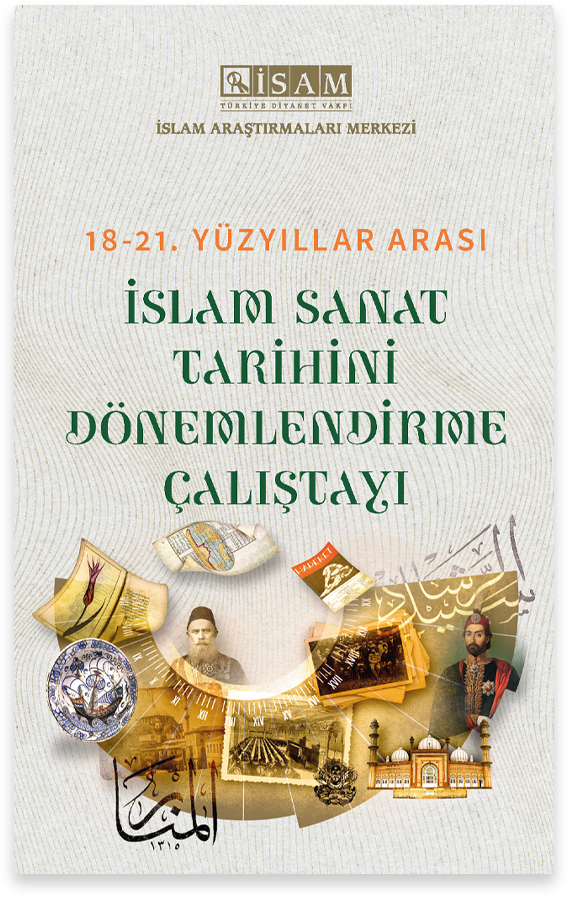
Proceeding from this perspective, attention has been directed toward the principal axes of change and the points of rupture related to the field. According to Prof. Dr. İbrahim Halil Üçer, the approach of Critical-Edition-Based Conceptual History (Tahkik Temelli Tasavvurlar Tarihi) does not seek to subject Islamic intellectual and artistic history to a single, comprehensive, and absolute scheme of periodization encompassing all dimensions of human life. Instead, it aims to periodize different disciplines through multiple axes while taking into account the specific contexts of time, place, and scholarly discipline. In this sense, while a historian who wishes to trace political transformations within a particular geographical region may conduct research centered on dynastic changes and shifts in political power, a researcher examining continuity and transformation in the art of calligraphy may depart from approaches centered on political transitions and instead adopt criteria specific to the object of their own inquiry.
Within the framework of the Critical-Edition-Based Conceptual History approach, the periodization of Islamic art history involves examining the relationship between the nature of historical ruptures, the foundational principles that shape the character of a given period, and the symptoms that render these ruptures visible. The project aims to describe the continuities, transformations, and ruptures that are characteristic of the eighteenth to twenty-first centuries. In addition, it seeks to analyze the processes of development, transformation, and reception of Islamic-centered scholarship that produces knowledge within the framework of modern academic disciplines. Since such a critically grounded study cannot be realized through an individual desk-based effort alone, a collaborative research environment has been established through the contributions of participants from different disciplines.
Within the scope of the Workshop on Periodizing the History of Islamic Art between the Eighteenth and Twenty-First Centuries, scholars specializing in the disciplines of literature, architecture, calligraphy, and music presented their respective assessments regarding periodization within the conceptual framework adopted by the project. They sought to address the question of whether there exist points of rupture that overlap or converge across different disciplines. In this context, rather than approaching Islamic arts as a monolithic structure, the workshop opened to discussion the possibility of dividing each discipline into periods according to its own internal dynamics. As Üçer emphasized, while investigating points of rupture within these disciplines, a flexible understanding of periodization was adopted rather than rigid boundaries. Indeed, a new period often carries traces of the preceding one, and the history of thought and art generally contains transitional and transformative processes rather than sharp breaks between the old and the new. For this reason, the dates, events, or transformations that initiate or conclude periods were not regarded as absolute boundaries but rather as highly representative indicators. Accordingly, the workshop sought to answer the question of whether a plural and flexible model of periodization—based on the internal dynamics of different disciplines—can be proposed for the field of Islamic art history.
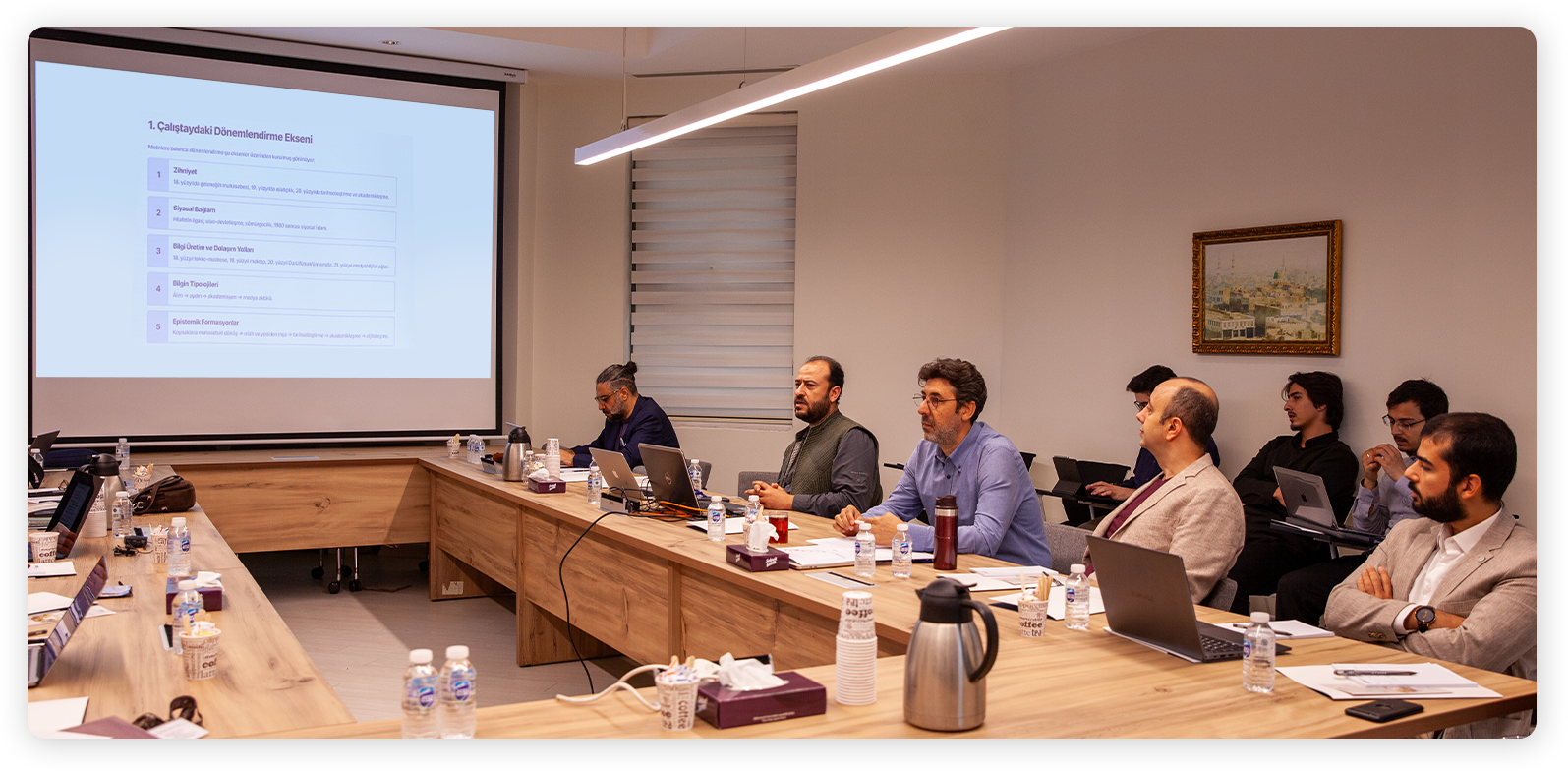
In his opening address, Üçer drew attention to the fact that when periodization is undertaken, the axes of change and points of rupture may vary depending on differences in time and place. From the perspective of temporal change, for instance, the axis of transformation in the nineteenth century appears to have been shaped around reformism, whereas in the twentieth century the phenomenon of politicization emerged as a prominent feature. Similarly, it is necessary not to overlook the effects of geographical and regional transformations. Indeed, from an Egypt-centered perspective, Napoleon’s invasion of the region may be considered one of the principal ruptures, whereas in an Ottoman-centered reading the Treaty of Karlowitz (1699) stands out as a decisive turning point. At the conclusion of his opening remarks, Üçer emphasized that the nineteenth century may be characterized as an “age of doubt” for the Islamic world. He noted that developments in the political history of the late Ottoman period played a significant role in the formation of this condition. When examined from a spatially oriented perspective, the tracking of transformations that occurred in different regions constitutes one of the important questions that must be addressed within the scope of the Critical-Edition-Based Conceptual History Project. Following Üçer’s opening speech, sessions focusing on periodization in four different branches of the arts were held. The sessions and the subjects addressed therein are presented below in sequence.
Workshop on Periodizing the History of Islamic Art between
the Eighteenth and Twenty-First Centuries
First Oturum
Literature, Continuity, Change, and Transformation: An Assessment from the Eighteenth Century to the Present
Prof. Dr. Berat Açıl
Discussant: Doç. Dr. M. Şerif Eskin
Second Oturum
Phases in the History of Architecture in the Ottoman Geography from the Eighteenth Century to the Present
Doç. Dr. Halil İbrahim Düzenli
Discussant: Dr. Alidost Ertuğrul
Third Oturum
Changes and Transformations in the Art of Calligraphy from the Eighteenth Century to the Present: A Proposal for Periodization
Dr. Öğr. Üyesi Ali Rıza Özcan
Discussant: Nurullah Özdem
Fourth Oturum
Continuity, Change, and Transformation in Classical Turkish Music from the Eighteenth Century to the Present: A Proposal for Periodization
Dr. Öğr. Üyesi Harun Korkmaz
Discussant: Prof. Dr. Hikmet Toker
The central question of the workshop, which addressed issues of continuity, transformation, development, and rupture in the fields of literature, architecture, calligraphy (ḥusn al-khaṭṭ), and music within Islamic art, was whether it is possible to produce a periodization of intellectual history based on the internal dynamics of these disciplines. Within this framework, the development and transformation of classical literature were first examined. Before evaluating the transformations that occurred in literature beginning in the eighteenth century, Prof. Dr. Berat Açıl drew attention to the formative period of classical literature. Although this period is generally accepted as spanning the thirteenth to fifteenth centuries, the fact that a work such as Âşık Paşa’s Garibnâme was composed during this time indicates, according to Açıl, that the formative phase of classical literature was completed in the fourteenth century. Beginning in the sixteenth century, changes in the Ottoman patronage system constituted a significant turning point in the arts, particularly in classical literature. According to Açıl, the transition to the kafes system represented a decisive threshold in literary history insofar as it transformed the profile of poets and artists who benefited from patronage. From the seventeenth century onward, the expansion of patronage to a broader social circle increased the visibility of art and literature within the public sphere. During this period, books and libraries became fundamental elements of patronage practices, and the Köprülü Library emerged as one of the notable examples of this transformation. Another turning point that contributed to the wider circulation of literary works in the public sphere was the establishment of the Müteferrika Printing Press. However, according to Açıl, the printing press in the Ottoman Empire long retained a largely symbolic function, while the real transformation occurred with the establishment of the Üsküdar Printing Press.
One of the major turning points affecting the literary sphere was the Vakʿa-i Ḥayriyye of 1826, when the Janissary Corps was abolished. With the establishment of a modern army, the process of Westernization, initially triggered by external influences, paved the way for the Tanzimat reforms, and these developments brought about significant transformations in the literary field as well. According to Açıl, the entry of external intervention into the literary domain and the beginning of modern literature may be associated with the Vakʿa-i Ḥayriyye. Nevertheless, this development does not imply that classical literature came to an abrupt end through a sharp rupture. On the contrary, this step toward modernity is significant in that it signals the completion of a period of search and the beginning of a process of transformation. Given that literary history rarely proceeds through sudden and radical breaks, it is more accurate to regard the years 1800–1860 as a critical period during which transformation in literary life can be observed. Indeed, despite these transformations, classical literature did not disappear immediately but gradually declined during the second half of the nineteenth century. Although classical literary production lost its influence, it continued to exist until the twentieth century. According to Açıl, the period after the twentieth century may be addressed under the heading of modern literature through shorter phases of periodization. The literary ruptures that emerged during these periods are closely related to major historical developments such as the proclamation of the Republic, the social and political transformations after 1950, the developments following 1980, and the political processes after 2000.
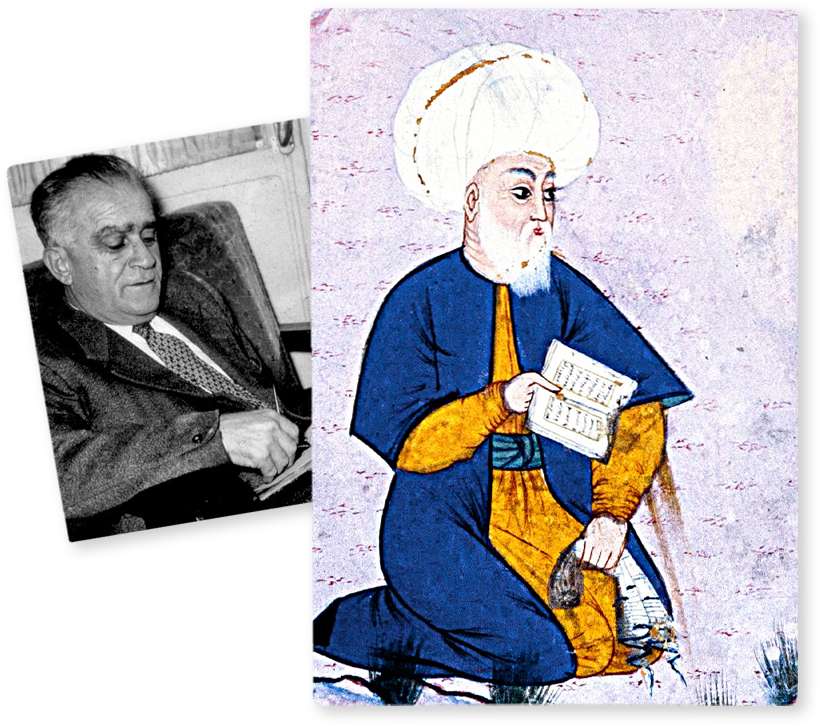
The relationship between literature and politics emerges as one of the central issues in attempts to periodize literary history. Assoc. Prof. Dr. M. Şerif Eskin discusses whether the history of literature, art, and culture can be analyzed through sharp ruptures in the same way that political history often is. He emphasizes that, unlike political history, such an approach is not fully applicable to the field of literature. For instance, the formation of Tanzimat literature only became fully visible in the 1870s, a development that reflects the nature of literature as a field that does not correspond directly to political events but is nevertheless indirectly shaped by developments in politics and intellectual life. This observation raises the question of which axes and criteria should be taken as the basis for writing literary history.
Eskin further notes that the history of Turkish literature has largely been constructed around a “cult of genius.” However, examining the social and material conditions that made possible figures such as Şeyh Galib (d. 1213/1799), Fuzûlî (d. 963/1556), and Bâkî (d. 1008/1600) requires that literary history be understood not through abrupt breaks but through structures and continuities. Narratives centered on genius tend to reinforce the idea of ruptures in literary history. By contrast, investigating the material and institutional conditions that enable such figures to emerge would allow for a more accurate periodization of literary and cultural history. From this perspective, the period between 1800 and 1860, which has often remained in the background, is regarded by Eskin as a critical phase during which significant transformations occurred in literature. Similarly, he argues that conventional periodizations such as Tanzimat, Servet-i Fünûn, and Fecr-i Âtî do not fully reflect historical reality. In particular, Servet-i Fünûn and Fecr-i Âtî should be regarded not so much as distinct periods but rather as literary movements. The designation “Tanzimat Literature” is also considered problematic, since the relationship between the Tanzimat Edict and literary production has not been sufficiently clarified. According to Eskin, the real institutional foundation of Tanzimat literature lies in the Mekteb-i Ulûm-i Edebiyye, established in 1839.
Another major problem in periodization studies is the tendency to interpret literary production as an abrupt break from classical literature. The acceptance of the Tanzimat as a “zero point”—as can be seen, for instance, in works such as Ahmet Hamdi Tanpınar’s Nineteenth-Century Turkish Literature—has often led to the neglect of literary continuity. This narrative of rupture has also continued in periodizations of literature after the twentieth century. Eskin argues that continuity in literature can instead be traced through dominant literary genres and narrative structures. For example, from the nineteenth century to the Yeşilçam era, melodrama appears as a prominent narrative form. From a structural perspective, the general narrative pattern of melodrama does not differ radically from that of mesnevî narratives. From this point of view, it becomes possible to identify a line of continuity extending from the fourteenth and fifteenth centuries to the 1990s. Similarly, the lover–beloved–rival triangle, frequently encountered in the popular culture of the 1990s, corresponds to the mazmun structures of classical literature. This situation reveals the necessity of focusing not merely on singular events in literary history but on structures, concepts, and long-term continuities. As indicated by Fernand Braudel’s concept of longue durée, although change occurs over time, certain underlying structures continue to exist without undergoing fundamental transformation. Consequently, studies aimed at periodizing literary history should not seek to fragment the existing whole through rigid boundaries but rather to make visible the continuities and shared structures that persist across different periods.
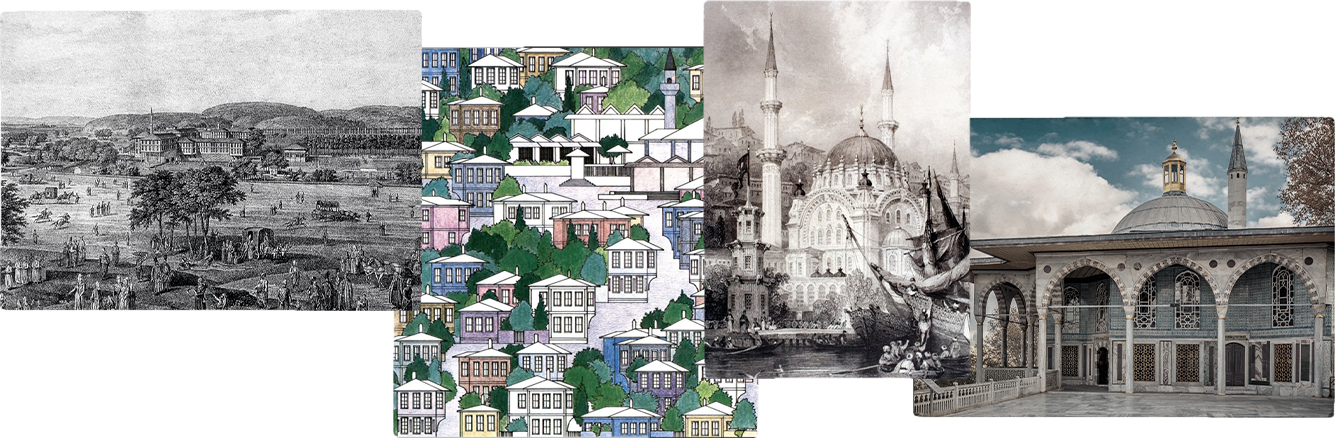
Architecture emerges as one of the central themes addressed within the framework of periodizing traditional artistic disciplines. Assoc. Prof. Dr. Halil İbrahim Düzenli notes that although the relationship between architecture and art may at times appear ambiguous, the field nevertheless constitutes a highly fertile area of research. Examining architectural works, Düzenli argues that it is not possible to read the history of art through a simple introduction–development–conclusion scheme. Instead of a linear progression, the development of Ottoman architecture should be understood within a network of interactions.
Similarly, Dr. Alidost Ertuğrul emphasizes that architecture is shaped by numerous political, economic, and social factors, and therefore cannot be periodized through rigid boundaries. According to Ertuğrul, the trajectory of architecture displays a fundamentally transitional and fluid character. For instance, the nim sıva (half-plaster) technique observed in the Rami Library was developed during the reign of Sultan Mahmud II due to material constraints. Likewise, during wartime, the removal of lead elements from mosques and madrasas to be sent to the front clearly illustrates the relationship between architectural development and societal needs.
If a general classification of Ottoman architecture is to be proposed, Düzenli suggests the following scheme: a classical period until the twelfth century, a period of renewal between the twelfth and seventeenth centuries, and subsequently a period of reflection and search. Interaction between the eastern and western regions of the Islamic world increased particularly during the era of Emir Timur, while the nineteenth century, as in other fields, witnessed the prominence of revivalist tendencies in architecture. In the Republican period, a polarization structured around the axis of the national and the modern became increasingly visible in architectural discourse.
In pointing to the turning points in architectural history, Ertuğrul draws attention to several key developments: the Westernizing reforms of the Selim III period, the architectural consequences of the abolition of the Janissary Corps during the reign of Mahmud II, and the reflections in architecture of transformations occurring across the Ottoman geography during the reign of Abdülhamid II, particularly through transportation infrastructure and military buildings. The impact of these developments was felt with varying intensity across different regions, depending on the importance and geographical position of cities.
Another major problem in architectural periodization concerns the extent to which architectural works have survived to the present day. For example, the famine experienced in the Wadai Sultanate in Chad (1635–1909) resulted in the large-scale loss of architectural heritage, thereby making this problem visible. Similarly, in Central Asia, while some regions have preserved architectural structures relatively well, in others the surviving material remains extremely limited. This situation leads to the interpretation of architectural history through an uneven and fragmented heritage.
Ertuğrul further emphasizes that Ottoman architecture should not be evaluated solely through monumental structures, but also through the culture of residential construction. Moreover, building materials constitute one of the crucial elements shaping architecture. For example, until the 1890s, large glass windows could be used only in palatial structures, and despite frequent fires, the transition to masonry construction remained limited due to its high cost. In the late Ottoman period, the economic strengthening of the non-Muslim population is also regarded as one of the factors that produced visible differentiation in architectural practices.
In conclusion, architectural development does not follow a single-dimensional and linear process, but rather displays a multilayered and transitional structure. For this reason, efforts to periodize architectural history must adopt an approach that takes into account the plural and complex character of architecture.
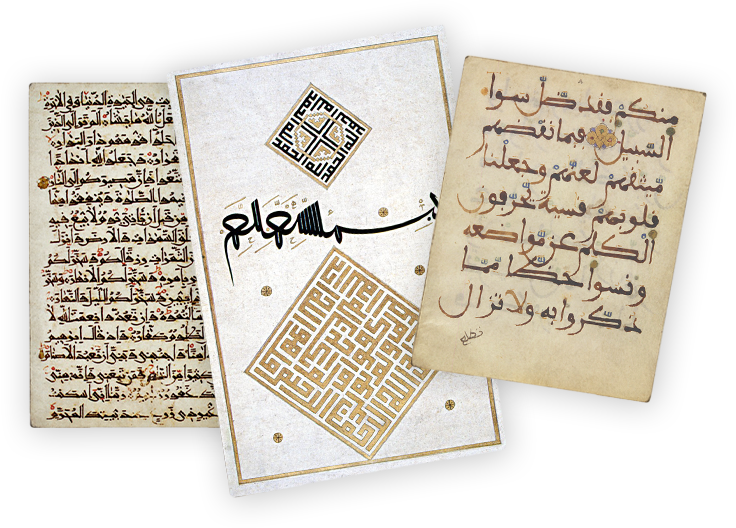
The art of Arabic calligraphy (ḥusn al-khaṭṭ) constitutes one of the principal disciplines addressed within the framework of the periodization study. According to Assist. Prof. Dr. Ali Rıza Özcan, periodization in this field can be established through the dominant stylistic forms of script that can be traced in calligraphic practice. While styles of writing provide a basic framework for periodization, it is not possible to identify sharp ruptures in the art of calligraphy, as is the case in other artistic disciplines. With the emergence of Islam during the time of the Prophet Muhammad (peace be upon him), no entirely new script was introduced; rather, the Nabataean writing tradition continued. The history of Arabic script can largely be traced through the writing of the Qurʾān. After the completion of the revelation, the sensitivity shown toward writing the muṣḥaf in the most beautiful manner laid the groundwork for the script to acquire an artistic dimension. According to Özcan, Arabic calligraphy began to develop as an art with the Kufic tradition, flourished during the ʿAbbāsid period, and in the Ottoman period its central locus shifted from Baghdad to Istanbul. During this process, two principal forms of writing developed for manuscript production and architectural applications. In particular, inscriptions on architectural surfaces and ceramic tiles, due to their relatively high degree of preservation, possess special importance for the purposes of periodization.
In the dating of calligraphic history, Şeyh Hamdullah, who lived in the fifteenth century, is generally regarded as marking the beginning of classicism in Ottoman calligraphy. Karahisarî (d. 963/1556), one of the representatives of the school of Yāqūt al-Mustaʿṣimī (d. 698/1299), is also counted among the important figures of this period. After the sixteenth century, the celî (large-scale script) developed in a relatively stable manner. In the seventeenth century, however, with Hafız Osman (d. 1110/1698) refining the hilye form, panel calligraphy (levha) emerged as a third mode of expression alongside manuscript and architectural inscriptions. The culture of calligraphic panels became widespread after the late seventeenth century, enabling verses from the Qurʾān and prophetic traditions (ḥadīths) to be written in portable forms suitable for display on walls.
In the history of calligraphy, it is generally accepted that no decline occurred after the eighteenth century. On the contrary, the nineteenth century witnessed a continuation of progress through figures such as Mahmud Celâleddin (d. 1829), Mustafa Râkım (1758–1826), and Yesârîzâde Mustafa İzzet (d. 1849). Even after the adoption of the Latin alphabet, some scholars maintain that the established aesthetic structure of calligraphy continued to be preserved. Nevertheless, Özcan warns that if the field remains closed to new explorations, such continuity may lead to aesthetic rigidity and a limitation of creative possibilities.
Emphasizing that sharp distinctions between periods cannot be drawn in the history of calligraphy, Nurullah Özdem argues that the field can instead be classified according to styles and stylistic tendencies. These styles can be traced particularly through celî sülüs and Kufic inscriptions found on architectural works. Özdem identifies two developments as decisive for periodization: the emergence of a distinctively Turkish style of calligraphy and the innovations introduced during the reign of Sultan Mahmud II. Following the long-standing influence of the Arab style and the Baghdad school, a new Turkish style took shape in Amasya with Şeyh Hamdullah (d. 926/1520). Over time, technical interventions such as altering the angle of the pen (kalem meyli) were introduced, and as a result, the Turkish style acquired a dominant character across much of the Muslim world, with the exception of Iran, though often expressed through different stylistic nuances. The Mahmud II period stands out as a phase in which innovations in calligraphy became particularly visible. Among the most notable examples are Mustafa Râkım Efendi’s proposals for rendering the imperial tughra in a clearer and more legible manner. Similarly, the practice of writing letters without intersecting one another can be observed in architectural inscriptions such as those on the Nakşidil Sultan Mausoleum and the Nusretiye Mosque. However, it is noteworthy that these reforms remained largely confined to architectural inscriptions, while the established artistic conventions continued to prevail in qıṭʿa (calligraphic fragments) and murakkaʿ (calligraphy albums).
The relationship between script and practical needs emerges as a determining factor in the development of calligraphy. For example, the dîvânî script, developed in the Ottoman Empire for official correspondence, was intentionally written in a highly intricate form in order to prevent later alterations. For this reason, it was not traditionally regarded as an artistic script. Today, however, all forms of writing—including dîvânî—may be employed for artistic purposes. Özdem also emphasizes that the emergence of new styles requires the presence of a problematic or challenge to be addressed. According to him, the great masters of calligraphy were able to develop new stylistic tendencies precisely insofar as they succeeded in producing solutions to the problems they encountered. At the present stage, however, the absence of new problem areas within traditional arts has become a major factor limiting the production of innovation. Indeed, a hilye written today often does little more than reproduce the style of Hafız Osman. Özdem interprets this situation as the result of a lack of new searches for meaning through artistic production within the realm of traditional arts.
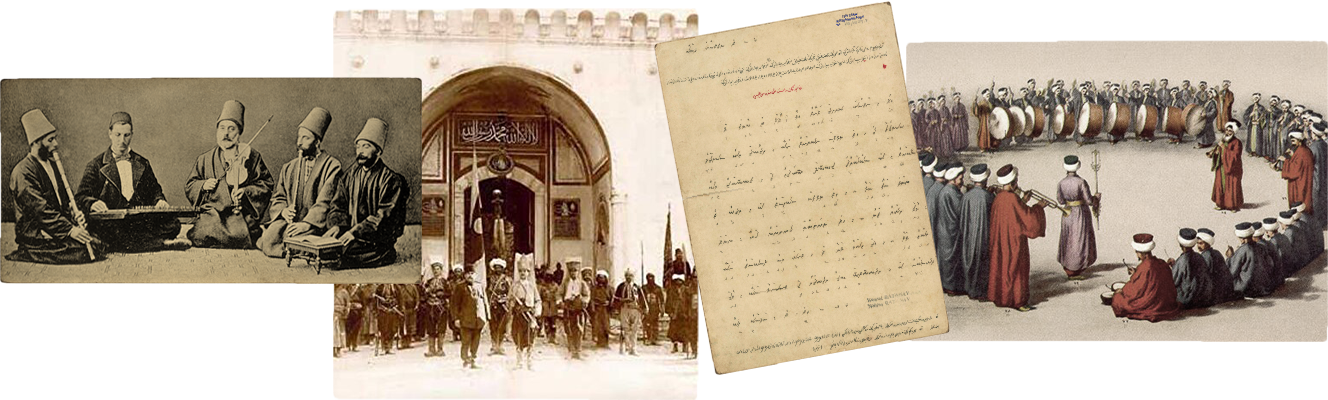
The periodization of Classical Turkish music presents a more complex picture compared to other artistic disciplines, largely due to the tradition of repertoire transmission through the meşk system, which has ensured continuity across generations. Assist. Prof. Dr. Harun Korkmaz notes that research in this field is still at a relatively early stage. He considers the reign of Mehmed IV in the seventeenth century as a key starting point for the transformations in Classical Turkish music, since it was during this period that musical style began to acquire a more systematic character. Korkmaz emphasizes that Classical Turkish music should not be understood as a musical practice widespread among the entire population, but rather as a musical tradition belonging to a particular social stratum. When evaluating music in the late Ottoman period, he argues that two musical spheres must be considered together: the court and elite musical tradition, in which the şarkı form became dominant, and the tekke (Sufi lodge) musical tradition, which developed outside the courtly sphere. The continuity of the classical musical tradition was maintained during the Tulip Period, particularly through the patronage of rulers such as Sultan Ahmed III and Grand Vizier Nevşehirli Damat İbrahim Paşa. In the eighteenth century, the long reign of Sultan Mahmud I, himself a composer, stands out as a significant period in the history of music. The major transformation in music, however, entered a new phase during the reign of Selim III. From this period onward, the şarkı form became increasingly prominent in Classical Turkish music, while tensions began to emerge between the traditional meşk method of transmission and the notation system. Contrary to the widespread assumption that classical music deteriorated after the establishment of the Republic, Korkmaz points to the continued existence of the socially stratified structure of Classical Turkish music and the ongoing continuity of the musical tradition cultivated within Sufi lodge circles outside this structure.
Emphasizing that Classical Turkish music should not be periodized through individual figures but rather through repertoire and musical forms, Prof. Dr. Hikmet Toker argues that this musical tradition, unlike Western music, exhibits a circular and interconnected structure. According to Toker, Ottoman music emerged from the synthesis of three fundamental components: theoretical traditions of Arab and Greek origin, the Byzantine musical heritage, and folk music.
Institutionalization played a decisive role in shaping the classical musical tradition. The establishment of the Seferli Chamber in the Enderun Palace School constituted one of the important stages in this process. With the Hafız Post period, the distinctive character of Ottoman music became more clearly defined, and forms such as gazel and kaside became key carriers of this tradition. Until the nineteenth century, a musical understanding based on intervals between pitches prevailed. The transition to a full-pitch system, however, introduced new ruptures in musical practice. Toker regards the abolition of the Mehter band in 1855 as a major turning point that led to a loss of representation for Turkish musicians. This crisis of representation deepened during the reign of Sultan Abdülmecid and continued even after the establishment of the Republic.
Beginning in the 1920s, a noticeable decline occurred in the number of musicians capable of sustaining the classical musical tradition. After the 1960s, Classical Turkish music gradually withdrew from the cultural mainstream and entered a prolonged period of crisis that continues to the present day. Toker characterizes the current era as a “period of traditionalist imagination,” in which defensive and formalist approaches have become prominent due to the perception that tradition itself is under threat. At the same time, he notes that in recent years new discourses challenging this perspective have begun to emerge.
The workshop organized to explore the periodization of Islamic art history between the eighteenth and twenty-first centuries brought together scholars from the fields of literature, architecture, calligraphy, and music to discuss both the possibilities and the limitations of periodization in art history. The general consensus emerging from the presentations and discussions was that sharp ruptures cannot easily be identified in the history of the arts. While political events may occur within relatively short timeframes, their effects on culture and the arts often become visible only in the long term. The fact that Tanzimat literature began to produce its characteristic works only years after the Tanzimat Edict offers a striking example of this phenomenon.
One of the principal conclusions of the workshop was that periodization based on individuals regarded as “geniuses” does not provide an adequate analytical framework. Instead, each discipline proposed periodization models grounded in its own internal dynamics. Accordingly, in literature, emphasis was placed on continuities, structures, and concepts; in calligraphy, on styles and stylistic tendencies; in architecture, on patterns of interaction; and in music, on repertoire and musical forms as the principal bases for periodization.
|
Hatice Kavas She was born in 1998 in Üsküdar, Istanbul. She graduated from Kartal Anatolian Imam Hatip High School in 2018 and from the Department of Arabic Theology, Faculty of Theology, Marmara University in 2022. She completed her M.A. degree in the Department of Islamic History and Arts at Bursa Uludağ University in 2025 with a thesis entitled “Kalbī Administrators in the Fāṭimid State (A.H. 296–443 / A.D. 909–1052)”. She is currently pursuing her Ph.D. in Islamic History at the Institute of Social Sciences, Marmara University, and works as a Research Assistant at the Center for Islamic Studies (İSAM), Türkiye Diyanet Foundation (TDV) in the field of Islam and Muslim Communities in Africa. Her research interests include the political and intellectual history of Africa. She is proficient in Arabic and English and has intermediate proficiency in French. |
Hatice Kavas
She was born in 1998 in Üsküdar, Istanbul. She graduated from Kartal Anatolian Imam Hatip High School in 2018 and from the Department of Arabic Theology, Faculty of Theology, Marmara University in 2022. She completed her M.A. degree in the Department of Islamic History and Arts at Bursa Uludağ University in 2025 with a thesis entitled “Kalbī Administrators in the Fāṭimid State (A.H. 296–443 / A.D. 909–1052)”. She is currently pursuing her Ph.D. in Islamic History at the Institute of Social Sciences, Marmara University, and works as a Research Assistant at the Center for Islamic Studies (İSAM), Türkiye Diyanet Foundation (TDV) in the field of Islam and Muslim Communities in Africa. Her research interests include the political and intellectual history of Africa. She is proficient in Arabic and English and has intermediate proficiency in French.