
Why Are Personal Archives Important?
Nuray Urkaç Güler
Why Are Personal Archives Important?
Nuray Urkaç Güler
The late Ottoman intellectual emerges as a historical archetype who was nurtured within his own scholarly (ilmî) and cultural tradition, yet discovered a new intellectual ground and field of expression through contact with Western thought. Defined by Tanpınar as “the person caught between two civilizations,” this generation bore the mental and emotional burden of being, in the words of Yahya Kemal, “the generation that witnessed the collapse of an empire.” Given the general conditions of the period, the intimate relationship between political tension and intellectual life became the primary factor determining the fate of the late Ottoman intellectual. This process directly influenced both their political stances and private lives, often positioning them within an oppositional framework and leading to periods of exile. These years in exile resulted in a substantial volume of correspondence between these esteemed thinkers and their families or immediate circles. When letters exchanged with other contemporary intellectuals, politicians, and the world’s leading journalists, authors, and scientists are added to this corpus, a powerful testimony of the era in question comes to light.
It is possible to trace the intellectual world of this generation—who were multilingual, in constant interaction with international scholarly circles, and whose views resonated globally—not only through their published works but also through their correspondence, intellectual debates, and the practices reflected in their daily lives. In particular, the documents and visual materials handed down from circles prominent in their roles as administrators and statesmen serve as primary sources for historical research. Letters, as the primary means of communication of the period, hold a distinct importance for reflecting personal lives as well as the social and political conditions of the era.
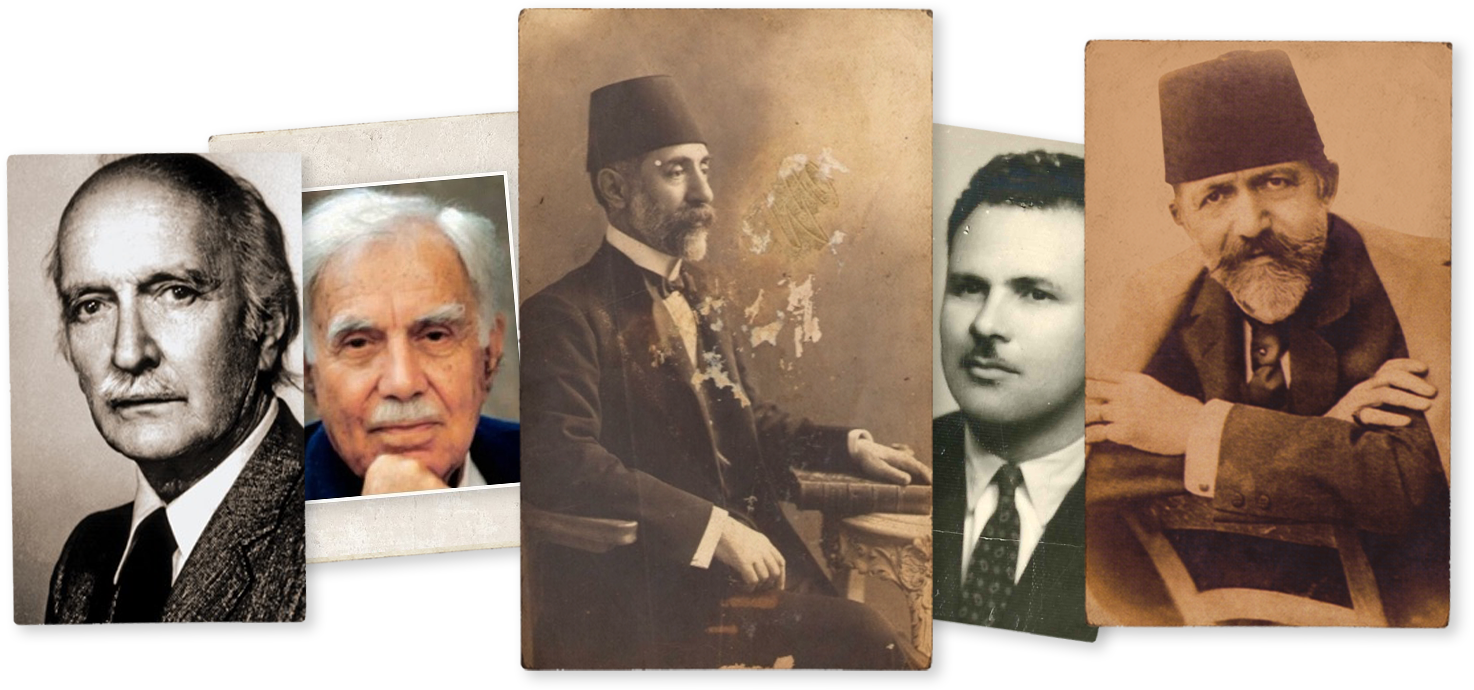
In Türkiye, one of the central reference points where this rich accumulation of documents belonging to late Ottoman intellectuals can be accessed collectively is the ISAM Library Archive (İKA). The private collections preserved within its body contain the personal archives of many prominent historical figures from the late Ottoman period and the early years of the Republic, making them available for researchers. These individuals stand as both the subjects and objects of historical knowledge within a spiral where personal matters and national issues are inextricably intertwined. Through these archives, one can observe not only the course of events but also the “language of the time,” its emotional atmosphere, and, most importantly, the ways in which the collection owners manifested their own identities.
For instance, upon examining his personal papers, Hüseyin Hilmi Pasha emerges as a figure who commanded respect not only from the Sultan and statesmen but also from the European press during his tenure as the Inspector General of Rumelia. Although he later served as Grand Vizier, he is primarily remembered in history and literature for this role due to his immense effectiveness as a statesman in the Balkans. Similarly, the artistic value of the items (book covers, postcards, etc.) printed by Ebüzziya Mehmed Tevfik at his printing house received international acclaim. Another striking figure, Rıza Tevfik Bölükbaşı, was a philosopher and poet whose opinions were sought by American journalists on various subjects and who remained in contact with Europe, America, and the Arab world.
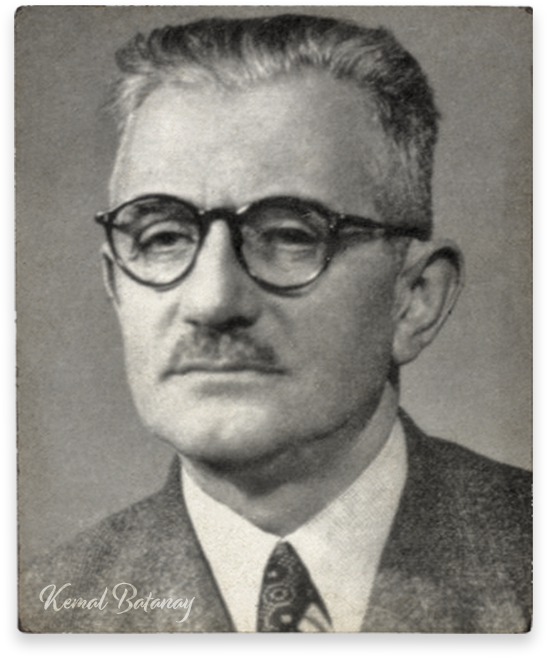
Furthermore, it is recorded that Hafiz Kemal Batanay, remembered today as a significant composer and calligrapher, deeply moved Mustafa Kemal with his recitation of the adhan (call to prayer). While serving in Edirne in 1916, Mustafa Kemal heard Batanay reciting the adhan at the Üç Şerefeli Mosque; he summoned him and congratulated him, saying, “My son, you have set us on fire today. I greatly admired and was moved by your recitation!” Mustafa Kemal further requested, “For as long as we remain in Edirne, whichever mosque I attend for the Friday prayer, you shall come to that mosque and recite the internal adhan.” The musical scores collected by Kemal Batanay have today transformed into a unique archive of Turkish music. (1)
Getting to know these historical figures closely and identifying historical data entails a process of understanding that goes beyond mere information and document collection. In this way, the researcher turns toward questions of how previous generations thought, how they produced, and how they related to the world, thereby gaining a new field of curiosity and inquiry.
This article aims to introduce the personal archives of late Ottoman intellectuals and certain prominent post-Republican academics and musicians, as preserved in the aforementioned private collections of the ISAM Library Archive.
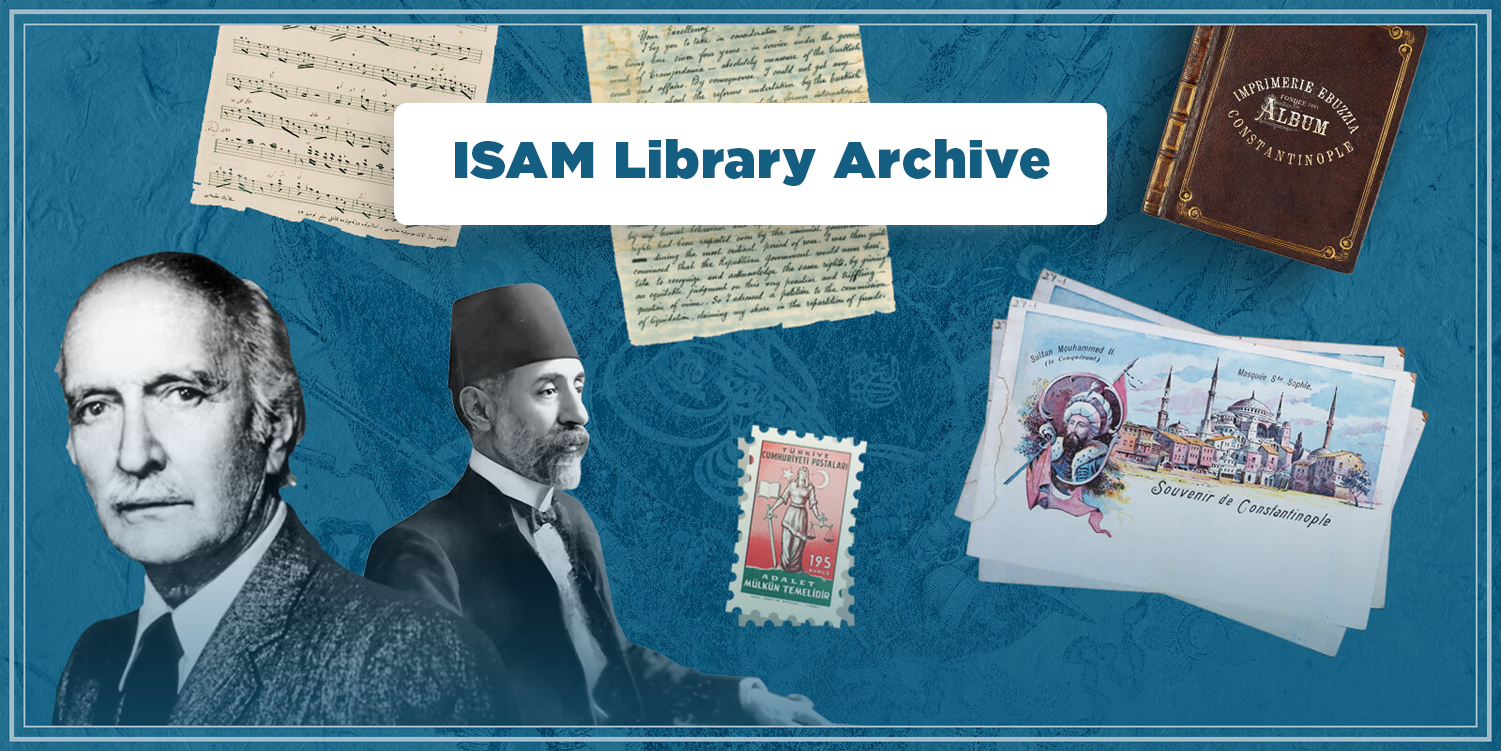
ISAM Library Archive (İKA)
The ISAM Library Archive (İKA) is a significant research unit housing archival material spanning a broad timeline from the 15th to the 21st century, comprising documents from Ottoman state institutions and figures of historical renown. Today, İKA hosts a total of 18 collections open to researchers. Of these, 14 are private collections, while 4 are digital collections affiliated with the Archive of the Office of the Sheikh al-Islam (Meşihat Arşivi / Istanbul Muftiate).(2) In this regard, the collections within İKA can be evaluated under two main categories:
- Records produced by Ottoman state institutions.
- Private archives (personal papers).
The institutional collections in the first group consist of the Catalogue of Sharia Court Records (Şer‘iyye Sicilleri), Archive Registers, Meşihat Archive Registers, and the Ulema Personnel Files (Ulema Sicil Dosyaları), all of which belong to the Archive of the Office of the Sheikh al-Islam and are available in our archive in digital format. The documents within these collections range from the 15th to the 20th century; the oldest document dates back to 1445, while the most recent is from 1934.
Sharia Court Records (Şer‘iyye Sicilleri) are court registers kept by Ottoman judges (kadis) from the 15th century to the early 20th century. They are extensively utilized by researchers from Türkiye and abroad as primary sources for Ottoman administrative, military, legal, social, architectural, cultural, and urban history. ISAM stands out as the institution holding the most comprehensive collection of Sharia Court Records in the world. The oldest surviving registers belong to the Bursa Sharia Court Records, dated 1455. Other registers from the Office of the Sheikh al-Islam, including the Meşihat Archive and Ulema Personnel Files, serve as primary sources for research in history and theology through documents produced within the cadres and departments of the Sheikh al-Islam, reflecting the administrative and legal structure of the Ottoman State.
The private collections (personal archives) in the second group—which are the focal point of this article—illuminate the political, social, and cultural transformation from the late Ottoman period to the present (1712–2018) through historical witnesses. Thanks to these private archives, İKA provides the opportunity to read the past through the personal lenses of individuals. (3) Due to the broad interests of their owners, these collections can be categorized under the primary scholarly disciplines of history, literature, philosophy, music, Sufism (tasawwuf), and theater.
Taken as a whole, the private collections represent a long and multifaceted narrative shaped by the archives of various historical figures from the 19th century to the present day. Key figures in İKA from the period spanning the First Constitutional Era to the Republic include:
- Pertevniyal Valide Sultan (wife of Mahmud II and mother of Sultan Abdülaziz)
- Crown Prince Yusuf İzzeddin Efendi (son of Sultan Abdülaziz)
- Hüseyin Hilmi Pasha (statesman of the Abdulhamid II era)
- Field Marshal (Müşir) Veysel Pasha
- Ebüzziya Mehmed Tevfik (journalist, printer, and artist)
- Rıza Tevfik Bölükbaşı (politician, educator, poet, and philosopher)
- Kemal Batanay (musician and calligrapher)
Chronologically, these collections begin with the Pertevniyal Valide Sultan Papers (1712–1888). This collection contains detailed information on Ottoman endowment (waqf) history and numerous historical documents. The primary elements of this collection include expense and accounting ledgers regarding the books endowed by the Valide Sultan, the grants (ihsan) she provided to palace and endowment officials, the repairs she carried out on important structures in Istanbul, her charitable activities in the Haram al-Sharif in Mecca, and the construction process of the hospital she established in Medina. These ledgers, with their ornate and colorful covers, clearly reflect that they are part of an archive belonging to a female member of the imperial dynasty.
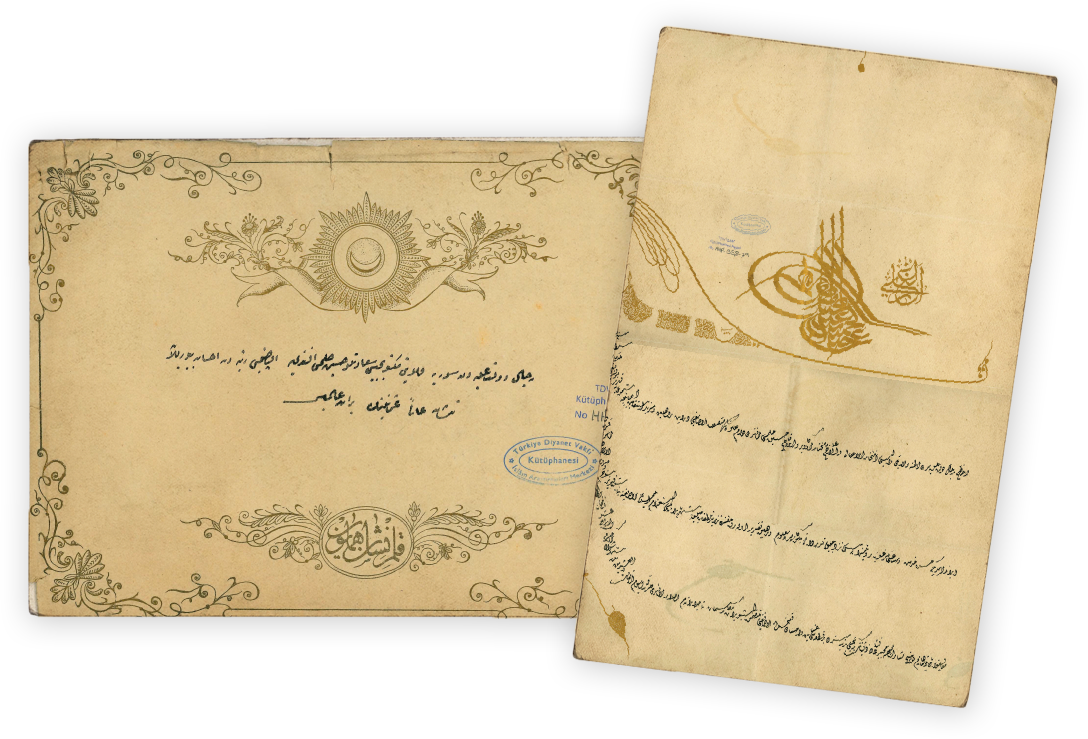
Another group of documents that stands out in terms of Ottoman administrative and military history belongs to Grand Vizier Hüseyin Hilmi Pasha, a prominent statesman who served as the Inspector General of Rumelia—a post established specifically for him during the exceptionally turbulent years of the Balkans under Abdulhamid II. This collection includes documents regarding the Pasha’s professional life between 1855 and 1923, as well as family correspondence continuing until 1969. (4) Similarly, the papers of Field Marshal (Müşir) Veysel Pasha and his son Ali Rıza Pasha (1800–1900) contain vital historical data regarding the political, administrative, and military activities they conducted in specific regions of the Balkans from 1843 onwards.
The Crown Prince Yusuf İzzeddin Efendi Family Papers (1909–1968) consist of internal family correspondence transferred from the archive of the family’s guardian, Mehmed Tevfik Biren. These documents provide significant insights into the family’s financial assets following the Prince’s death in 1909 and the life of the Ottoman dynasty after the founding of the Republic. The daily lives of the family and the general atmosphere of the period are vividly reflected in these letters.
The Ebüzziya Family Papers (1864–1994), belonging to a family that became a symbol of a turning point in Turkish printing history, represent a 130-year family archive. From the perspectives of three generations—grandfather, father/uncle, and grandson—this archive unfolds the political, literary, cultural, and artistic developments from the First Constitutional Era to the 1980s like a film strip. In this collection, it is possible to find concrete examples of the journalistic journey Ebüzziya Tevfik undertook alongside Şinâsi and Namık Kemal, as well as the value he added to the press and printing industry. The intense agenda of the National Struggle and the War of Independence can be followed through the personal papers of his sons, Talha and Velid Ebüzziya, while the post-Republic era is documented through the records of Ziyad Ebüzziya. The visual material within this collection—including artistically crafted book covers, postcards, arabesque motifs, ornamented stationery, calendars, maps, and sketches of carpet-weaving patterns—offers researchers a “visual feast.” (5)
The papers belonging to Rıza Tevfik Bölükbaşı (1856–1997) cover the first drafts of his writings on philosophy, literature, and Sufism (tasawwuf). In addition to his identity as an Ottoman intellectual, poet, and philosopher, his role as a politician led him to reflect the political agenda of his time as an oppositional actor in his letters and essays. Through the eyes of Rıza Tevfik—who scrutinized concepts through philosophical and Sufi texts, expressed himself through literary prose, and poured out his emotions through poetry—one can read the transition from the late Ottoman era to the early years of the Republic.
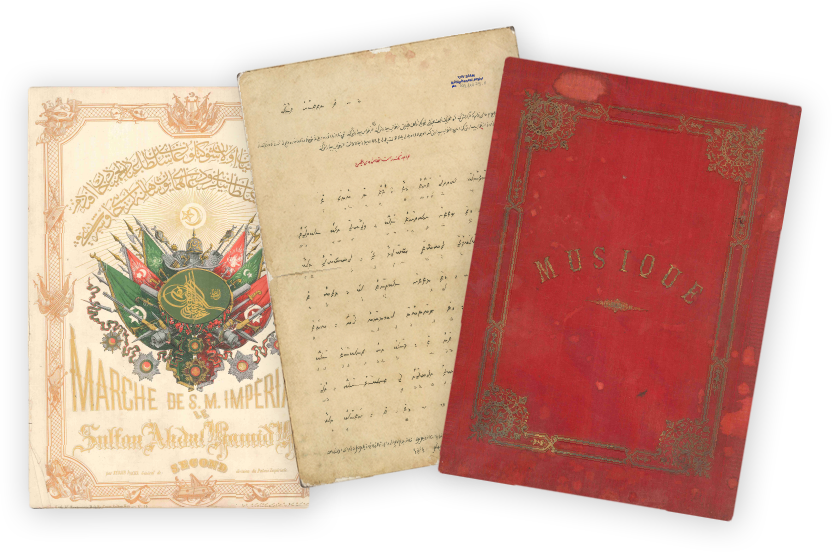
The notation archives of Kemal Batanay and Cüneyd Kosal are among the exceptional music collections of İKA, carrying the collective memory of Turkish music. Kemal Batanay (1891–1994)—a composer of Turkish music, a calligrapher, and a hafiz—studied religious music (meşk) under the great masters of his time. As one of the last representatives of the old-style tanbur performance, he witnessed the process of Turkish music transitioning into Western notation. His archive includes original Hamparsum notation, a system no longer in use today. Starting with notations dated 1891, the archive houses 2,137 musical scores, 1,342 of which are in Batanay’s own handwriting. (6)
The Cüneyd Kosal Turkish Music Archive (1931–2018), belonging to one of the most significant qanun masters and composers of the 20th century who possessed the richest private notation archive in post-Republican Türkiye, contains a massive collection of over 80,000 works. This archive, which features thousands of musical pieces and especially hundreds of ilahis (hymns) transcribed for the first time, includes signed scores by eminent composers and the notation notebooks of Kanûnî Hacı Ârif Bey. Containing the most comprehensive collection of ilahi notations known, this archive is invaluable not only for religious music but for the continuity of Turkish music as a whole; it is a historical legacy transmitted from Cüneyd Kosal to future generations.
Selected examples of studies based on the HHP: Hakan Özdemir, Towards the Revolution of 1908: The Assassination of Şemsi Paşa, Fatih University, Master’s Thesis, Istanbul 2013, p. 241; Hakan Özdemir, Balkanların Şekillenme Sürecinde III. Ordu: Teşkilat, Toplum, Siyaset (1878-1912), Istanbul: Timaş Yayınları, 2022, 511 p.; Hakan Özdemir, Abdülhamid’i Deviren Kurşun: İsyan, Suikast, İhtilal, Istanbul 2014, 312 p.; Özgür Tilbe, Hüseyin Hilmi Paşa’nın Rumeli Umumi Müfettişliği (1902-1908), Istanbul: Kitabevi, 2021.
For examples of studies utilizing the ZE Documents, see: Özgür Türesay, Un intellectuel Ottoman a la fin de l’Empire: Ebüzziya Tevfik (1849-1913) et Mecmua-i Ebüzziya, Paris: Institut National des Langues Civilisations Orientales, 2001, 169 p.; Özgür Türesay, Etre intellectuel a la fin de I’Empire Ottoman: Ebüzziya Tevfik (1849-1913) et son temps, Paris: Institut National des Langues et Civilisations Orientales, 2008, 825 p.; Ömer Faruk Şerifoğlu, Kültür ve Sanat Hayatımızda Ebüzziya Ailesi, Istanbul, 2020, 208 p.
For the postgraduate study based on the KB Music Archive, see: H. Gökçe İşler, Classification and Transcription into Modern Notation of Works Recorded with the Hamparsum Notation System in the ISAM Kemal Batanay Music Archive, Haliç University Institute of Social Sciences Department of Turkish Music, Master’s Thesis, Istanbul 2015, 314 p.; Muhittin Serin, Kemal Batanay: Bestekar, Tamburi, Hattat, Hafız, Istanbul: Kubbealtı Neşriyat, 2006, 208 p.
The poet and man of letters Orhan Şaik Gökyay (1925–1995), etched into collective memory with his poem “Bu Vatan Kimin?” (Whose is this Motherland?), possesses a rich corpus of documents pertaining to literary history. Manuscripts of his studies on Dede Korkut and Kâtip Çelebi constitute a significant portion of his papers. The archive includes first drafts of works and poems produced by Gökyay between 1925 and 1992, as well as personal correspondence and photographs. (7)
The papers of the Moroccan religious scholar Prof. Dr. Muhammad Tawit al-Tanji (1890–1997), who was born in 1918 during the days the Armistice of Mudros was signed, consist of manuscripts of his studies conducted up until 1974. His fields of research encompass disciplines such as history, literature, philosophy, hadith, fiqh (jurisprudence), kalam (theology), and astronomy. In addition to his studies on various copied (istinsah) classical works, the papers also contain the original drafts of his own unfinished works. (8)
The Bora Keskiner Collection (1937–1973), which dates to the post-1937 period, contains samples of the Sufi atmosphere following the Republic, including master-disciple (murshid-murid) correspondence, notation notebooks copied by Bestenigâr Ziya Bey, and various documents related to music. Collected from second-hand booksellers by Dr. Bora Keskiner, an expert in Islamic calligraphy and Ottoman art history, the most prominent documents in the collection are the correspondences between the Mevlevi sheikh Sadık Kurç, his disciple Halil Can, and other members of the brotherhood (ikhwan). This collection is vital for Sufi studies during the early Republican era.
The papers of Mehmed Safayhi (1955–1968), a librarian who cataloged extant manuscripts during his tenure at the Süleymaniye Library, contain the drafts of manuscript catalogs he prepared from 1955 onwards.
The Timur Kocaoğlu Papers, belonging to the Uzbek-born Turkish historian and political scientist Prof. Dr. Timur Kocaoğlu (1918–2006), predominantly feature manuscripts of his studies on the history of Turkestan. Furthermore, the collection includes stories, poems, and plays by Doctor Captain Şerafettin Bey (a martyr of the War of Independence), his correspondence with his brother Ahmet Kutsi Tecer, and letters and postcards belonging to Zeki Velidi Togan. These documents cover a timeframe extending from 1918 to the present day.
The recently opened Tercüman Newspaper Collection (1767–1983) contains manuscripts and treatises on a wide array of subjects, from history and literature to theater and Sufism. Although post-Republican manuscripts predominate, the oldest manuscript dates back to 1712. The collection also features an early manuscript of Namık Kemal’s work Celâleddin Hârizmşah, alongside the personal notebooks of Sabri Kalkandelen (director of the Yıldız Library during the reign of Abdulhamid II), his son Nureddin Kalkandelen, Mustafa Ziver Bey, the hero of Plevne Gazi Osman Pasha, the poet Ahmet Kutsi Tecer, and Sheikh al-Islam Mustafa Sabri Efendi.
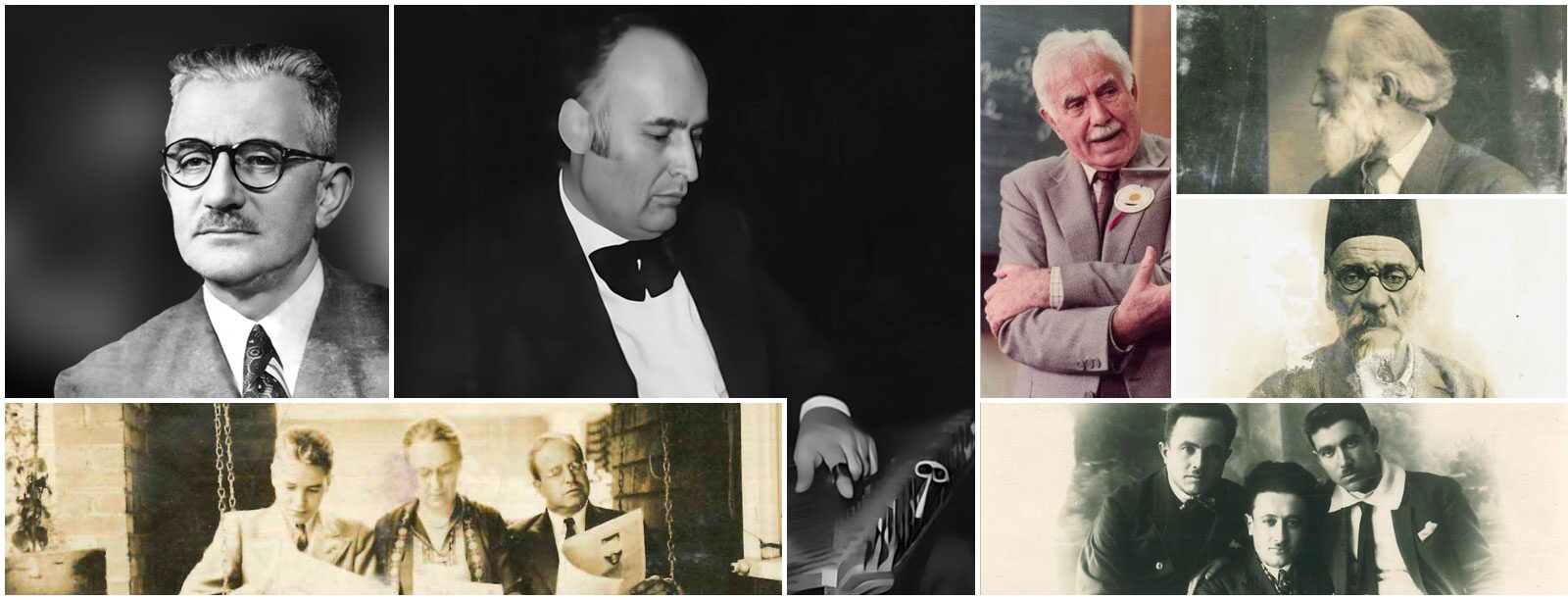
The personal papers of these figures, who have left their mark on history and society, comprise a diverse range of document types. Letters, personal notes, first drafts of scholarly works, records of hobbies or artistic endeavors, and the printing plates (clichés) of the materials they produced each function as historical documents. On the other hand, photographs, calendars, albums, newspapers, clippings, and maps enrich these papers from a visual perspective. Consequently, unlike official records, they offer the researcher a more varied and engaging body of material.
While some of the manuscript notes—which possess the quality of historical vouchers—belong to published works, others are documents that have never entered the literature. For instance, while Rıza Tevfik’s literary works have been published, many of his working drafts still await the attention of researchers. Similarly, photographs that have never been exhibited are tucked away on the archive’s shelves. These photographs, many of them worn with time, provide a visual richness to the source of historical information. When the broad content of the photographs and postcards in the Rıza Tevfik and Orhan Şaik Gökyay collections is evaluated, they emerge as precious primary sources that make visible the social circles and traces of daily life of that era.
These personal research materials possess a character that expands the framework provided by official documents, deepening and occasionally providing a commentary (sharh) on the perspective put forth by the dominant historical narrative. The personal papers of these public figures contain information that is not only private but also of immense historical value. Therefore, this material does not merely provide the researcher with neutral information; it reveals the personal experiences behind historical knowledge. When examined alongside official documents, the record kept by the state and the experience lived by the individual come together to complement one another. Thus, historical events gain new information and new possibilities for interpretation through individual experiences.
In conclusion, we present below the collective list of personal archive collections and invite you to closely examine and research this historical material.
ISAM Library Archive (İKA) – Access Links
Open Access Personal Collections:
1- Hüseyin Hilmi Pasha (HHP):
https://arsiv.isam.org.tr/index.php/huseyin-hilmi-pasa-evraki
2- Yusuf İzzeddin Family Records (YİE):
https://arsiv.isam.org.tr/index.php/yusuf-izzeddin-efendi-family-records
3- Veysel Pasha Papers (VP):
https://arsiv.isam.org.tr/index.php/veysel-pasa-evraki
4- Ebüzziya Family Archive (ZE):
https://arsiv.isam.org.tr/index.php/ebuzziya-ailesi-evraki
5- Cüneyd Kosal Turkish Music Archive (CK):
https://arsiv.isam.org.tr/index.php/cuneyd-kosal-turk-musikisi-arsivi
6- Kemal Batanay Music Archive (KB):
https://arsiv.isam.org.tr/index.php/kemal-batanay-music-archive
7- Orhan Şaik Gökyay Papers (OŞG):
https://arsiv.isam.org.tr/index.php/orhan-saik-gokyay-evraki
8- Rıza Tevfik Bölükbaşı Papers (RTB):
https://arsiv.isam.org.tr/index.php/riza-tevfik-bolukbasi-evraki
9- Mehmed Safayhi Papers (MSE):
https://arsiv.isam.org.tr/index.php/mehmed-safayhi-evraki
10- Muhammed b. Tavit et-Tanci Papers (MT):
https://arsiv.isam.org.tr/index.php/muhammed-b-tavit-et-tanci-evraki
11- Bora Keskiner Collection (BKK):
https://arsiv.isam.org.tr/index.php/bora-keskiner-koleksiyonu
12- Timur Kocaoğlu Records (TK):
https://arsiv.isam.org.tr/index.php/timur-kocaoglu-records
13- Pertevniyal Valide Sultan Papers (PVS):
https://arsiv.isam.org.tr/index.php/y44q-725a-zsac
14- Tercüman Newspaper Archive (TGK):
https://arsiv.isam.org.tr/index.php/the-tercuman-newspaper-archive
Institutional Catalogues (Restricted Digital Access): (9)
1- Sharia Court Records (ŞS):
https://arsiv.isam.org.tr/index.php/y44q-725a-zsac
2- Archive Registers (MD):
https://arsiv.isam.org.tr/index.php/defterler-1
3- Meşihat Archive (MŞH):
https://arsiv.isam.org.tr/index.php/seyhulislamlik-arsivi
4- Ulema Personnel Files (USD):
https://arsiv.isam.org.tr/index.php/ulema-sicil-dosyalari
(1) Muhittin Serin, Türk Hat Üstadları 3 – Kemal Batanay: Bestekâr, Tambûrî, Hattat, Hâfız, İstanbul: Kubbealtı Neşriyat, 2006, s. 31-32.
(2) The originals of the Shaykh al-Islamate documents have been transferred to the Directorate of State Archives, Ottoman Archives.
(3) Mustafa Birol Ülker, “İslam Araştırmaları Merkezi Kütüphanesi Arşiv-Dokümantasyon Koleksiyonu ve Veri Tabanları”, Arşiv Emektarlarına Armağan, haz. Nizamettin Oğuz, İshak Keskin, İstanbul 2013, s. 429-438; Kenan Yıldız, M. Birol Ülker, “Özel Arşivlerin Kütüphane Koleksiyonlarındaki Yeri ve Hizmete Sunulması: İSAM Kütüphanesi Örneği”, İsmet Binark Armağanı, haz. İshak Keskin, Ş. Nihal Somer, Nizamettin Oğuz, İstanbul 2015, s. 423-430; Nuri Taşkın, Arşivlerde Tanıtım Hizmetleri: İSAM Kütüphanesi Arşivi Örneği, Arşiv Dünyası, 2022, c. IX, sayı. 1, s. 10-26.
(4) Selected examples of studies based on the HHP: Hakan Özdemir, Towards the Revolution of 1908: The Assassination of Şemsi Paşa, Fatih University, Master’s Thesis, Istanbul 2013, p. 241; Hakan Özdemir, Balkanların Şekillenme Sürecinde III. Ordu: Teşkilat, Toplum, Siyaset (1878-1912), Istanbul: Timaş Yayınları, 2022, 511 p.; Hakan Özdemir, Abdülhamid’i Deviren Kurşun: İsyan, Suikast, İhtilal, Istanbul 2014, 312 p.; Özgür Tilbe, Hüseyin Hilmi Paşa’nın Rumeli Umumi Müfettişliği (1902-1908), Istanbul: Kitabevi, 2021.
(5) For examples of studies utilizing the ZE Documents, see: Özgür Türesay, Un intellectuel Ottoman a la fin de l’Empire: Ebüzziya Tevfik (1849-1913) et Mecmua-i Ebüzziya, Paris: Institut National des Langues Civilisations Orientales, 2001, 169 p.; Özgür Türesay, Etre intellectuel a la fin de I’Empire Ottoman: Ebüzziya Tevfik (1849-1913) et son temps, Paris: Institut National des Langues et Civilisations Orientales, 2008, 825 p.; Ömer Faruk Şerifoğlu, Kültür ve Sanat Hayatımızda Ebüzziya Ailesi, Istanbul, 2020, 208 p.
(6) For the postgraduate study based on the KB Music Archive, see: H. Gökçe İşler, Classification and Transcription into Modern Notation of Works Recorded with the Hamparsum Notation System in the ISAM Kemal Batanay Music Archive, Haliç University Institute of Social Sciences Department of Turkish Music, Master’s Thesis, Istanbul 2015, 314 p.; Muhittin Serin, Kemal Batanay: Bestekar, Tamburi, Hattat, Hafız, Istanbul: Kubbealtı Neşriyat, 2006, 208 p.
(7) For an example of an article utilizing the OŞG Documents, see: Şaban Özdemir, “Ölelim iki gözüm, ölelim…: Sabahattin Ali’den Orhan Şaik Gökyay’a Bir Mektup”, Kitap-lık, November-December 2016, Vol. 24, p. 188.
(8) Prof. Dr. Metin Yurdagür, “Muhammed b. Tavît et-Tancî’nin İslam Araştırmaları Merkezi’ne (İSAM) İntikal Eden Metrûkesi”, Uluslararası Prof. Dr. Muhammed b. Tavît et-Tancî Sempozyumu, 13-14 Ekim 2011, haz. Prof. Dr. Sönmez Kutlu, Ankara 2015, 155-162; Fuat Günel, “Muhammed b. Tavît et-Tancî’nin İslam Araştırmaları Merkezi’ne (İSAM) İntikal Eden Metrûkesi”, Uluslararası Prof. Dr. Muhammed b. Tavît et-Tancî Sempozyumu, 13-14 Ekim 2011, haz. Prof. Dr. Sönmez Kutlu, Ankara 2015, s. 163-165.
(9) The originals of these registers were recently transferred to the Republic of Türkiye Directorate of State Archives. Digital copies are accessible online. These digital collections can be examined at our Center, and digital copies can be provided to researchers via e-mail upon request within the framework of specific regulations.
|
Nuray Urkaç Güler She graduated from the Department of Archival Science at the Faculty of Science and Letters, Marmara University, in 2001. Between 2005 and 2008, she completed her master’s degree at the Department of Modern History at the Institute of Turkish Studies at Marmara University with her thesis titled “Gülfem Hatun Neighborhood in the 16th Century (1540–1600)”. Between 2014 and 2022, she completed her doctoral thesis titled “Women and Family in Times of War: Istanbul during the Ottoman-Russian War of 1768–1774” in the same department and received her doctorate. She has published various articles and papers on Ottoman social history, women, and war as part of her work. She has been working at the ISAM Library Archive since 2004. |
Nuray Urkaç Güler
She graduated from the Department of Archival Science at the Faculty of Science and Letters, Marmara University, in 2001. Between 2005 and 2008, she completed her master’s degree at the Department of Modern History at the Institute of Turkish Studies at Marmara University with her thesis titled “Gülfem Hatun Neighborhood in the 16th Century (1540–1600)”. Between 2014 and 2022, she completed her doctoral thesis titled “Women and Family in Times of War: Istanbul during the Ottoman-Russian War of 1768–1774” in the same department and received her doctorate.
She has published various articles and papers on Ottoman social history, women, and war as part of her work.
She has been working at the ISAM Library Archive since 2004.